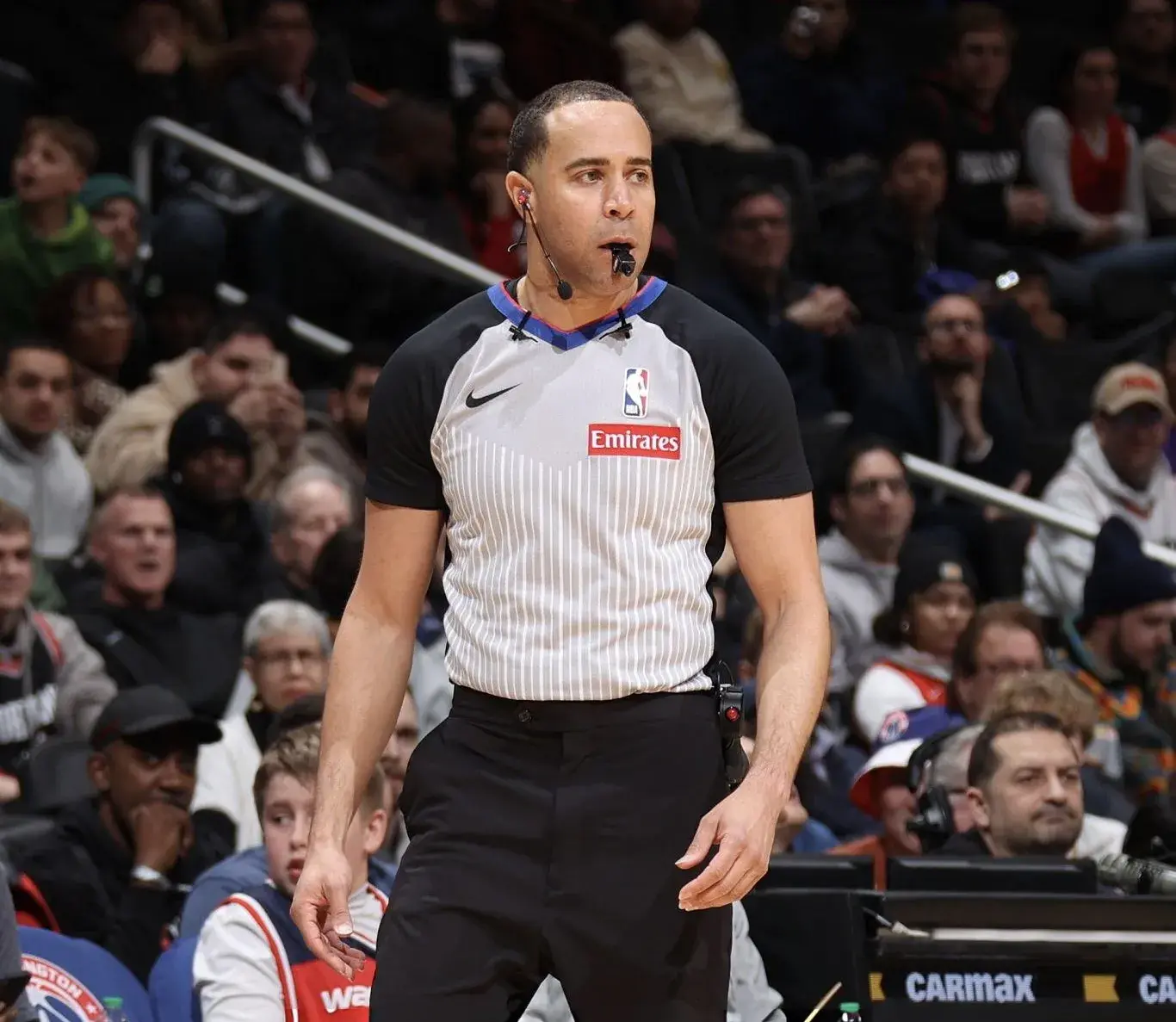
Jonathan Sterling is right in the middle of the action. Only now, he's not wearing a jersey; he's wearing the stripes.
Since making his NBA officiating debut in 2017, the Flagler College alumnus has spent nearly a decade working at the highest level of basketball. His path there began as a point guard for the Flagler Saints.
The Path That Started at Flagler
Basketball brought Sterling to Flagler as a transfer student, where then Head Coach Bo Clark gave him the opportunity to continue playing at the college level.
During his two years as a Saint, Sterling balanced basketball with his education while building relationships that extended beyond the court.
“Those two years of my life have really placed a big thumbprint on who I am today,” Sterling said.
Sterling continues to maintain that connection to Flagler, regularly returning to campus to speak with the men’s basketball team and select classes. He also established the annual Jonathan R. Sterling ’06 “Believe in Yourself” Scholarship for Men’s Basketball.
A New Role in the Game
Like many aspiring basketball players, Sterling dreamed of reaching the professional level.
After his time at Flagler, he continued pursuing that goal, playing in the United States Basketball League and the American Basketball Association.
Eventually, though, his playing career reached a turning point.
His next chapter began outside the sport. Sterling started working for McDonald's Corporation in a restaurant management role while also serving as a part-time high school assistant coach.
Although he had stepped away from competing on the court, many of the skills he developed through basketball translated naturally to his new role. Managing a restaurant meant building a team, placing employees in positions where they could succeed, and keeping operations running smoothly.
The experience gave Sterling a new perspective on leadership while he considered what his long-term future might look like. He even contemplated moving into the corporate side of the business.
But basketball was not finished with him yet.
The Early Days of Officiating
While working outside the sport, Sterling began officiating high school and junior college basketball in the St. Augustine area. What started as a way to stay connected to the game gradually became something more.
“It was kind of gradual where I just really fell in love with it (officiating),” Sterling said. “I really enjoyed doing it. That became my passion.”
As he spent more time officiating, Sterling wanted to dedicate more time to developing his skills. The transition from player to official, however, meant learning to approach a familiar game from an entirely different perspective.
He remembers attending one of his first referee training sessions at Raines High School, where officials gathered for a morning scrimmage.
“I showed up wearing a black T-shirt, some shorts, and no whistle,” Sterling said. “So, I didn't have anything. I was just showing up. I was there.”
Another referee gave him a whistle and let him wear a striped shirt during the camp. Sterling still has that whistle today, keeping it as a reminder of how far he has come.
The memory captures how unfamiliar the role initially felt. As a player, Sterling had spent years learning how to read the game, make decisions, and react under pressure. Officiating required him to evaluate those same situations from a different vantage point, make a judgment, and stop play when necessary.
“Blowing the whistle is difficult because when you see something occur, you're still thinking about it and processing it. Then you must take that information and blow your whistle to stop play, and now all the lights are on you: ‘All right, what happened? Why are we not playing anymore?’ It's a lot more difficult than some could imagine.”
As Sterling continued developing as an official, he balanced officiating high school and junior college games with another role as a director at a local YMCA. As he gained experience and began receiving assignments at higher levels of competition, officiating became an increasingly viable career path.
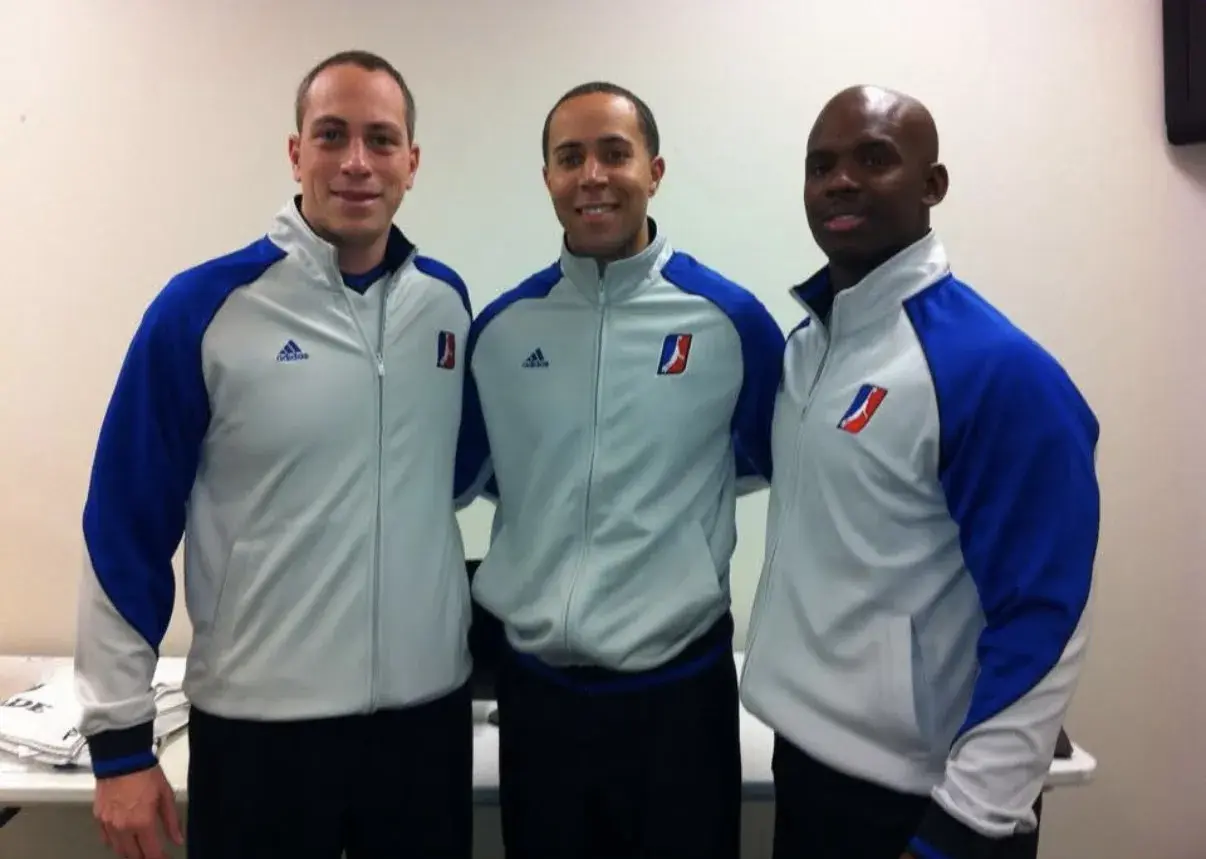
After almost three years, Sterling reached a turning point. He earned an opportunity in the NBA G League, formerly known as the NBA Development League, and had to decide whether to continue balancing two careers or commit fully to officiating.
Sterling chose to take the leap.
“I got hired into the NBA G League, and I was like, ‘It's now or never.’ I want to just take this in full force and see what I can do with it," Sterling said.
Behind the Whistle: Life in the NBA
Sterling made his NBA officiating debut in 2017, reaching a level he had spent years working toward. Now in his 10th season as an NBA referee, he knows that staying at the highest level requires constant preparation, accountability, and a willingness to keep learning.
“It's daily training, and learning” Sterling said. “That's nonstop.”
The demands of the job extend beyond the court, too. Sterling works between 50 and 65 games each season, often spending long stretches away from home. He may spend 10 days on the road before returning to his home in Atlanta for only 24 to 48 hours and heading back out again. Balancing that schedule requires careful planning and an understanding of the time the profession takes away from family.
His wife, Lauren Holtkamp-Sterling, understands those demands firsthand. The two met at a college officiating meeting in Norfolk, Virginia, while pursuing careers in basketball. Holtkamp-Sterling joined the NBA in 2014, three seasons before her husband, and retired from on-court officiating about three seasons ago. She now works as a WNBA rules analyst for ESPN and ABC.
Their shared experience gives them a unique understanding of the profession. They discuss rules, break down calls, and offer each other honest feedback about the decisions officials must make in real time.
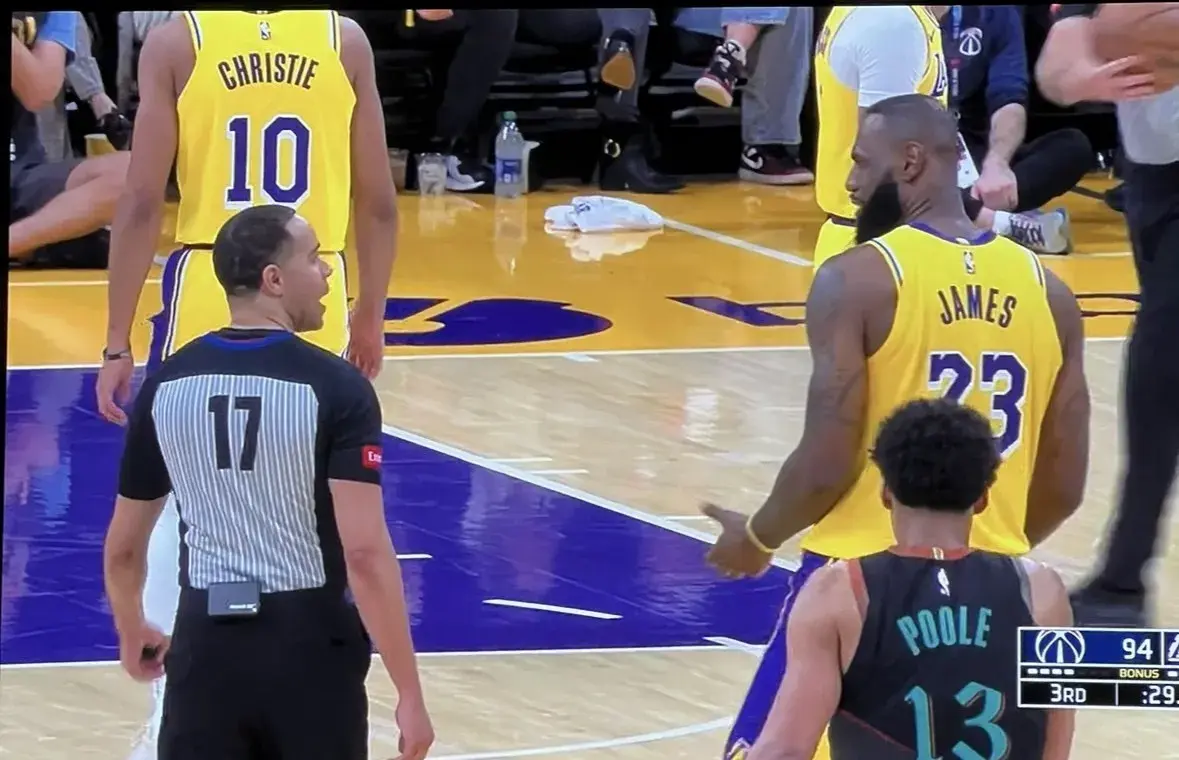
Around his eighth NBA season, Sterling reached a point where he felt less pressure to worry about how he was perceived on the court and more freedom to simply be himself.
“It was just time to be me,” Sterling said.
That shift allowed him to relax, have fun, and reconnect with what he enjoyed about officiating. After years of working to prove himself and earn his place in the NBA, he had reached a point where he could trust his preparation and experience rather than feel the need to second-guess himself.
Finding His Own Path
Sterling's career has taken him from college basketball to restaurant management, local officiating, and ultimately, the NBA. He credits discipline, optimism, and decision-making with helping him navigate those transitions.
A philosophy he heard along the way continues to guide him.
“To get to the top of a mountain, there's so many different paths. But when you get to the top, there's only one view,” Sterling said. “That really resonates with me. My journey is different from others, and I'm OK with that. It's my journey!”
Sterling has also never felt the need to follow the crowd.
“You could be a part of a group, but I never really want to be just a part of the herd,” he said. “I think that if you're willing to be uncomfortable, to not go left when everyone's going left, and go right, that's where you can really shine and put your thumbprint onto what you want to do.”
His approach comes down to believing in himself and committing to his goals.
“I eliminated the word try,” Sterling said. “So, it's either you do or you don't, and then you build towards what you want to attain. I learned early on in life, to believe in yourself. That has held true to this day.”