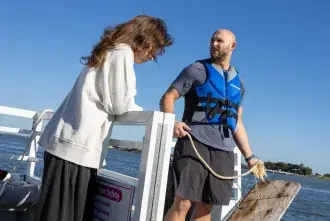


“A lot more students are seeking international opportunities now,” said Jessica Howell, Assistant Dean for Global Education and International Partnerships. “Next Spring term we are sending 13 students abroad; in the past, that number would have been around three.”
When the Flagler Forward campaign closed in June 2026, it had increased study-abroad participation by 647%* and established 21 scholarship funds to help students finance their FlagSHIP trips, whether domestic or international. For students who want to explore the world beyond the United States, those investments are expanding access to global learning.
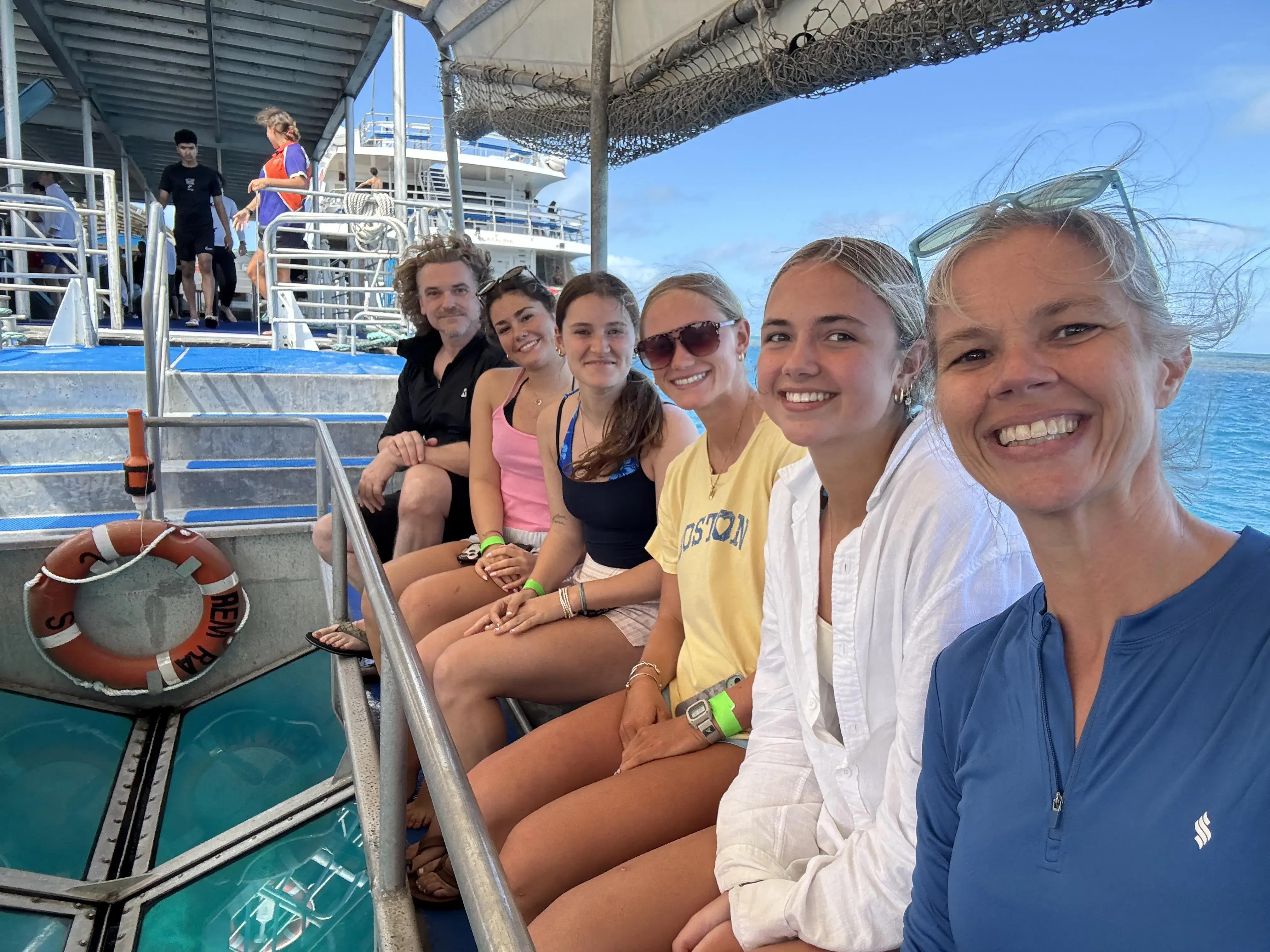
“FlagSHIP is like a teaser for students who might never otherwise consider studying abroad,” said Howell. “Through scholarship aid, they go to another country, and they’re like, ‘This is fantastic!’ And while they’re there, they start to think, ‘Could I do this for a whole semester?’”
That growing interest is reflected in the range of opportunities students are pursuing. Through the Center for Global Education, students can explore short-term faculty-led programs, semester exchanges, and international internships. Howell has seen students consider destinations they had never imagined visiting and seek encounters that connect with interests beyond their original academic plans.
But global education’s most meaningful impact is bigger than just destination: “I always tell my students: ‘I want you to learn to be comfortable being uncomfortable,’” she said. “Many students have changed their majors as a result of FlagSHIP because it forces them to think about things differently.”

Brody Johnson ’28 experienced that shift during a FlagSHIP to Tanzania. A finance major, Johnson returned with a new interest in international relations. Conversations during the trip about tourism, international perceptions, and the impact of global security warnings prompted him to think differently about his academic and professional future. He is now preparing for a semester exchange in Spain.
“The trip made me realize I wanted more of that exposure in my life,” Johnson said. “Before I went, I thought I’d probably end up behind a desk. After Tanzania, I changed my major because I wanted to keep traveling and learning from people and places I didn’t know.”
Howell believes encounters like Johnson’s prepare students for life after Flagler by encouraging curiosity, adaptability, and a deeper understanding of people whose experiences will inevitably differ from their own.
“We are all humans, and we all have basic interests, and we have basic desires and thoughts,” she said. “Seeing that essence of humanity wherever we go is a really cool and inspiring thing for students. It helps them combat the misinformation while being open-minded and self-aware.”
As more students pursue study abroad and return to campus transformed by global experiences, the impact of Flagler Forward’s investment will come into even sharper focus: in the new academic pathways they forge, the expansive mindsets they develop, and the rich perspectives they bring into the classroom.
Far from the end of a journey, returning home will be just the beginning.
*Percentage derived from the increase in total study abroad students between 21-22 (34) and 25-26 (254).