New this academic year, Flagler College's Department of Natural Sciences has partnered with Florida Water Warriors to provide students with a floating classroom, bringing hands-on marine science instruction directly into the field.
The partnership provides students enrolled in Marine Biology (BIO 203) and Invertebrate Zoology (BIO 360) with regular opportunities to study marine organisms, collect samples, and observe the local estuary firsthand. Both courses incorporate the boat experience into their curriculum, offering students a unique complement to their classroom and laboratory instruction.
For Ed McGinley, chair of the Department of Natural Sciences, the partnership grew out of a desire to expand experiential learning opportunities outside of the traditional laboratory setting.
After exploring several local tour companies, Florida Water Warriors emerged as the right fit, offering both an appropriately sized vessel and access to classroom space during inclement weather.
"Flagler College as a whole, and the science department more specifically, pride ourselves on hands-on experiential learning," McGinley said. "Every college in the country has classrooms and textbooks, along with lab spaces. Not every institution has opportunities for students to learn in the field aboard a vessel."
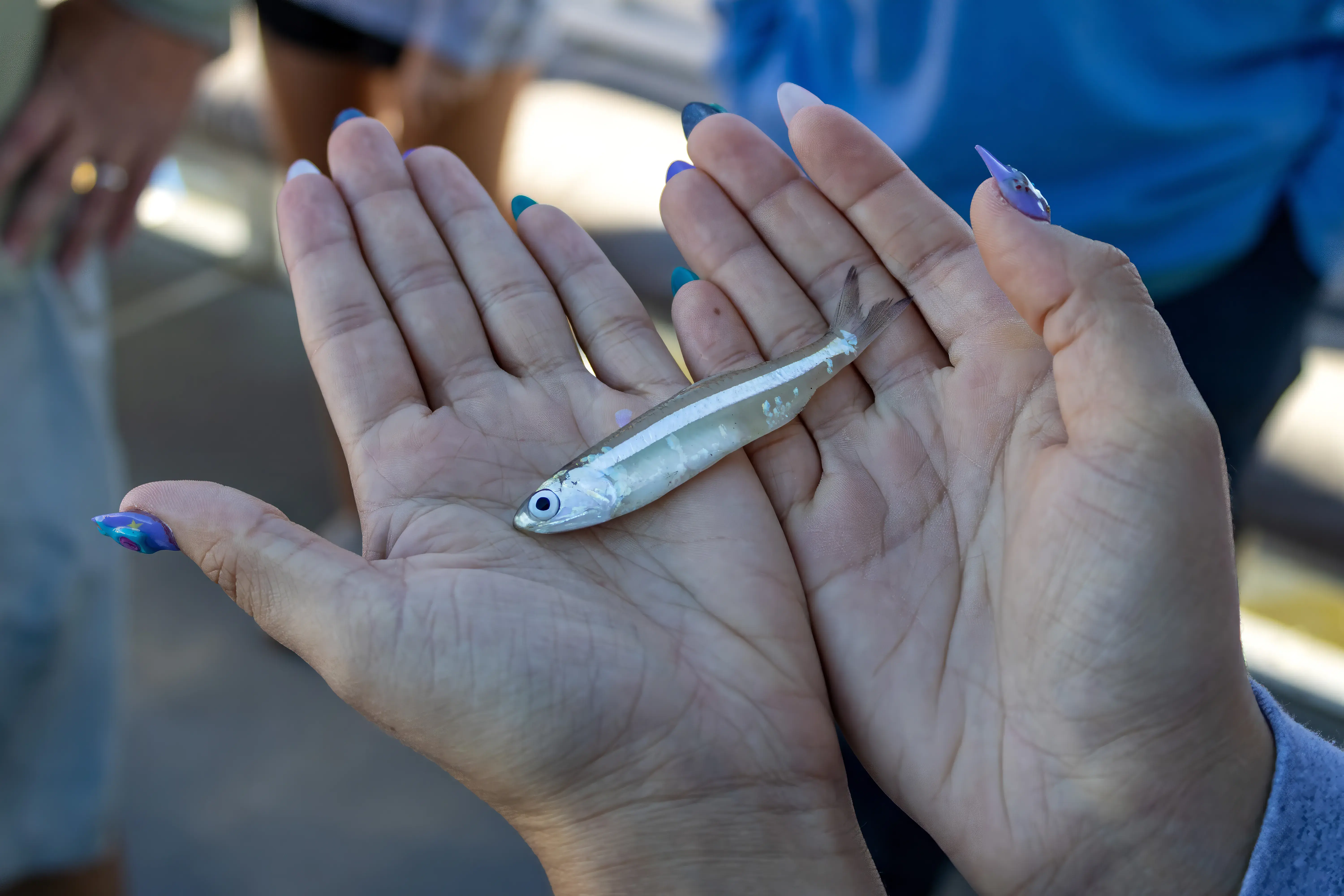
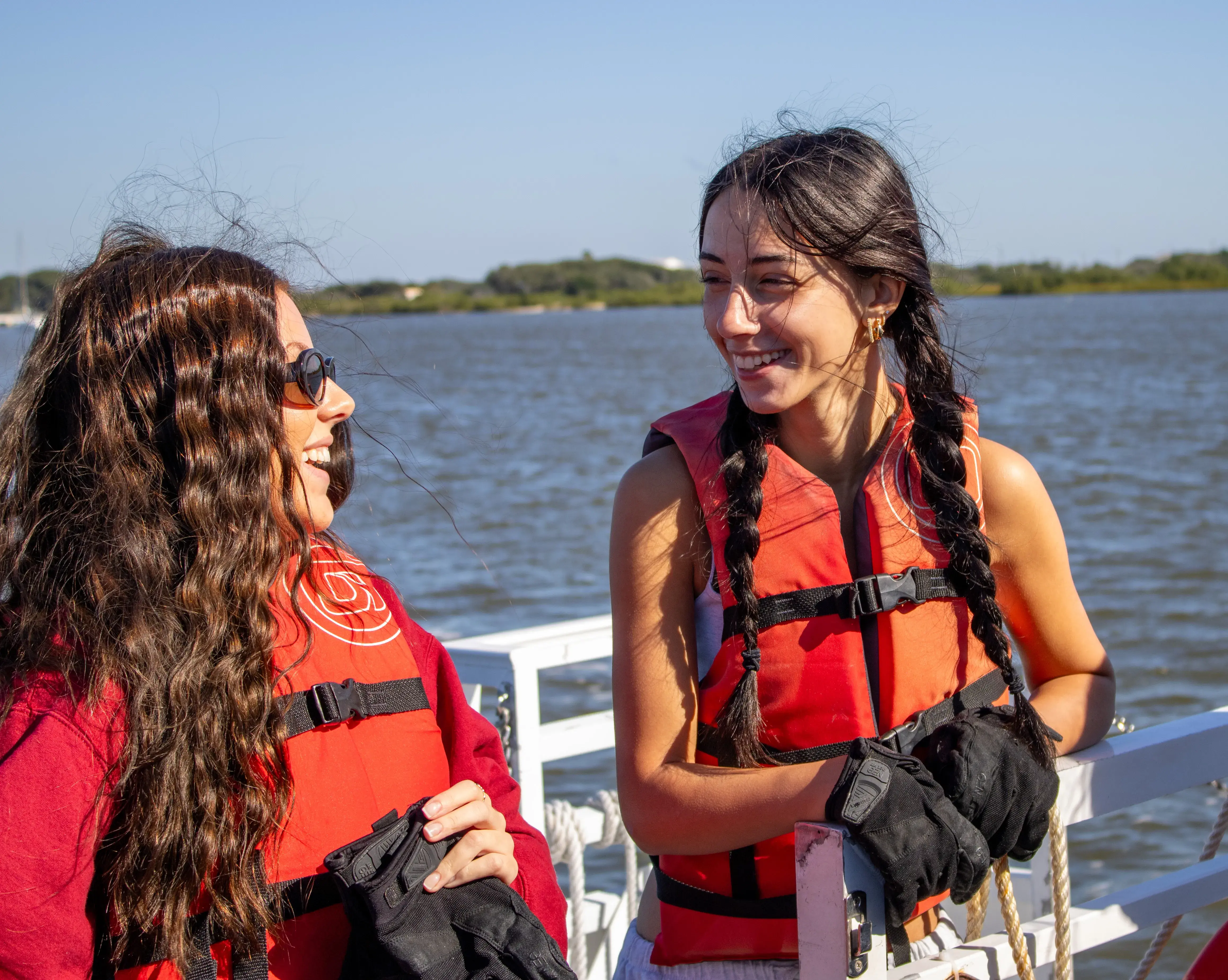
During a recent trip aboard the 35-passenger boat, students from both courses took turns collecting and examining specimens from the surrounding waters. Among the day's discoveries were a broad-striped anchovy (pictured below) and a comb jelly, giving students an up-close look at some of the organisms they study in their courses.
But not every trip produces an abundance of marine life, and McGinley sees value in those experiences, too.
"ZERO IS A NUMBER!" he said, describing a phrase he frequently shares with students during fieldwork. "Catching zero things in a net still gives us information. The tides, the weather, the location, the depth, etc., might have been off."
For students, those moments provide an opportunity to understand the unpredictability of field research and the importance of collecting data over time. Each sampling trip represents a snapshot of environmental conditions, reinforcing the need for repeated observations to identify meaningful patterns.
Beyond the scientific concepts, the experience also introduces students to the practical demands of working in marine science.
"This type of experience mimics what students could possibly do in their careers, so they can see what skills are needed to perform fieldwork," McGinley said. "It also shows them the hard (and sometimes dirty!) side of the job."
Located along one of Florida's diverse estuaries, Flagler offers students access to a wide variety of marine life and opportunities for continued exploration. More than 300 fish species have been documented in the local waters, according to McGinley, who has spent more than 15 years studying the area's marine environments.
Looking ahead, McGinley hopes the partnership will expand beyond course instruction to include opportunities for students to contribute to long-term research projects, assist with public education efforts, and collaborate with other academic disciplines.
"A good research project creates more questions than it answers," McGinley said. "So, a good collaboration should grow into more areas than it started with."
For Flagler students, the floating classroom provides another opportunity to put their studies into practice, building the fieldwork experience and scientific skills that will serve them well beyond graduation.