

This summer, two members of the Flagler College community became part of the preparation firsthand. Through vastly different roles, they each helped bring the world’s game to life during the 2026 FIFA World Cup, hosted across the United States, Canada, and Mexico.
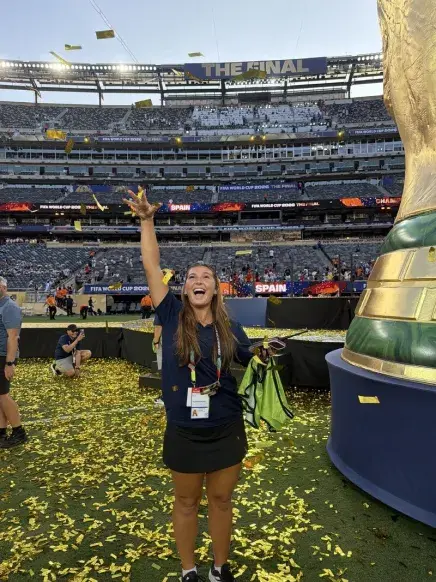
Brooke Rienecker, a senior business administration major and midfielder on the Flagler College women's soccer team, spent this summer as a field operations intern with MetLife Stadium, temporarily renamed New York New Jersey Stadium for the tournament. Meanwhile, Flagler alumnus and former men's soccer player Ben Straw '18 concluded a yearlong contract with FIFA, managing venue dressing and tournament signage throughout the competition.
Though their responsibilities differed, both gained an inside look at the planning, collaboration, and precision required to deliver one of the world's biggest sporting events.
Ben Straw ‘18 | From Classroom Dream to the World Cup
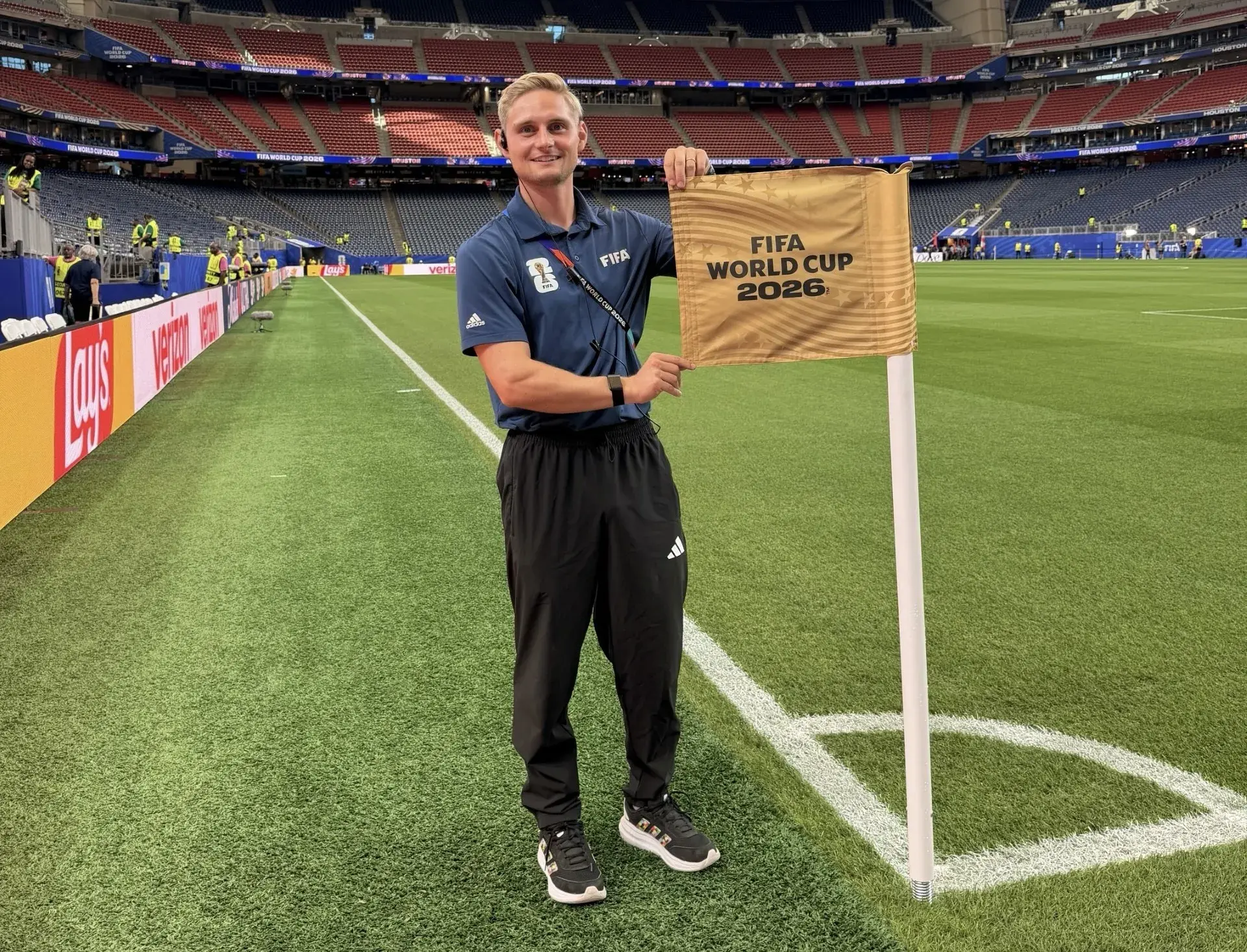
Years before he helped transform NFL stadiums into FIFA World Cup venues, Ben Straw was sitting in a sport management classroom at Flagler College writing down his career goals.
Near the top of the list was to work on a FIFA World Cup
"I had written down in a sport management class while at Flagler... the FIFA World Cup was pretty high on the agenda," Straw said. "It is as if I’ve been building towards this moment over the years, ticking off goals to work with major sport brands and rights holders within the industry. Everything aligned.”
This summer, that top goal became reality.
As a Stadium Dressing and Signage Manager for FIFA, Straw spent nearly a year preparing for the 2026 FIFA World Cup before relocating to Houston temporarily for the tournament.
There, he helped transform the home of the NFL's Houston Texans into a FIFA World Cup venue, overseeing the branding of the stadium’s dressing, functional areas, and wayfinding signage that shaped how players, media, staff, and fans experienced the tournament.
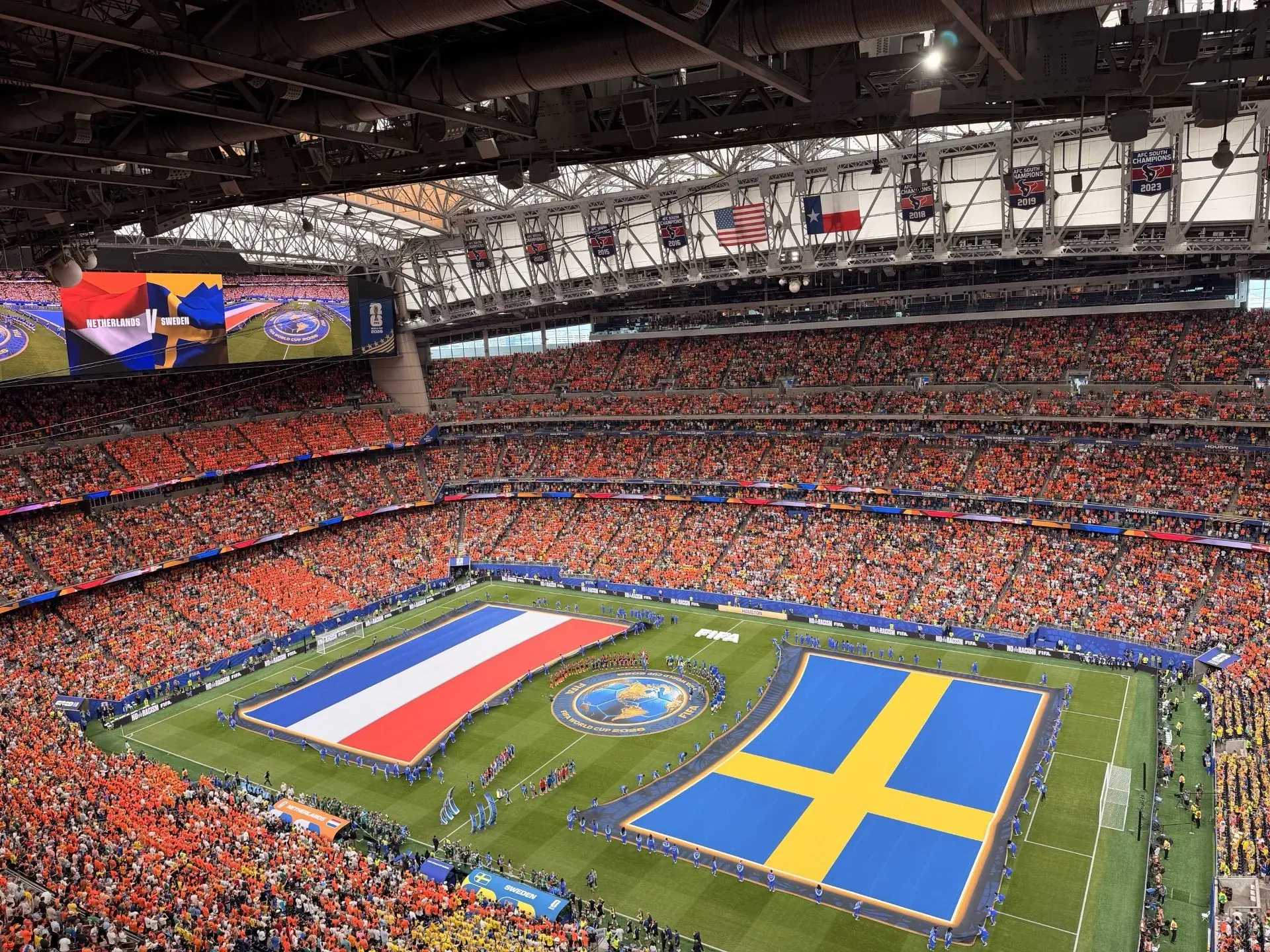
To millions watching around the world, the transformation appeared effortless.
Behind the scenes, it was anything but.
"There are lots of different functional areas that make up the ecosystem of how everyone comes together to deliver a tournament at this scale," Straw said.
His role required constant collaboration across nearly every department inside FIFA. Broadcast camera angles influenced branding placement. Media and hospitality plans affected wayfinding. Suppliers worked against tight deadlines while every installation had to meet FIFA's standards and remain on budget.
"The biggest challenge is recognizing and accepting the complexity of it," Straw said.
By tournament time, months of planning shifted into execution.
Each match day began six hours before kickoff as crews installed player tunnel backdrops, positioned interview boards, completed venue walkthroughs, and responded to last-minute requests before fans entered the stadium.
"Match day itself for us was quite straightforward. It’s all in the preparation between match days where branding repairs or adjustments are needed as we constantly strive to improve the experience," Straw said. "As the tournament entered into the latter stages, our dressing scope of work naturally increased to support the live broadcast & fan experience."
Still, nothing compared to hearing the opening whistle.
"I think when I saw the opening ceremony for the first time and then the whistle goes... it was like, 'Okay, our stadium’s games are underway, it’s actually happening,'" Straw said.
As a lifelong England and Manchester United supporter, Straw cherished the opportunity to witness some of the sport's biggest names up close, including Cristiano Ronaldo, in what was likely his final World Cup. But what left the greatest impression wasn't a player or a match.
It was the atmosphere.
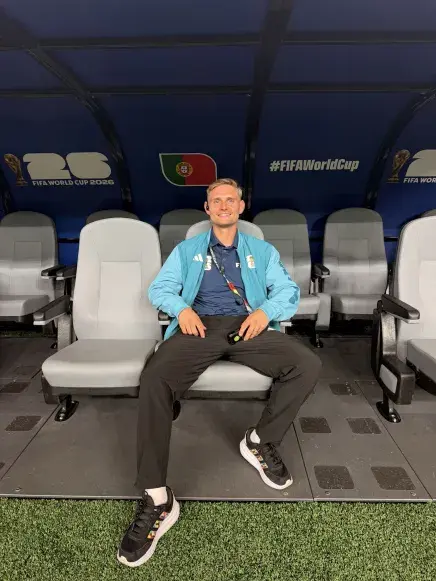
"The unity in culture and the togetherness... putting all the other problems in the world aside for something that's so much bigger than I think a lot of people realize," Straw said. "When you see it come to life in person, it's electric."
Working behind the scenes also changed how he views sports.
Fans experience the spectacle. Event staff experience something else entirely.
"I always refer to this analogy when describing live event delivery," Straw said. "You're like a swan. You’re smooth on the surface to everyone around you, but underneath the water & in the background you’re often paddling rapidly"
While supporters watched world-class soccer unfold, dozens of radio channels buzzed with conversations about operations, security, hospitality, transportation, media, and countless other moving pieces. The goal was simple: make the impossible look effortless.
Looking back, Straw credits that mindset to years of intentionally building toward opportunities like the World Cup.
After graduating from Flagler in 2018, the former men's soccer player and sport management major began his career in Boston before returning to England, where he worked in sports marketing and brand activation with organizations including Nike and The Football Association. He later returned to Florida to lead commercial partnerships at IMG Academy before accepting the opportunity with FIFA. Each role expanded his experience in marketing, partnerships, brand activation, and major event operations, gradually preparing him for the opportunity he had envisioned years earlier.
"I think when you come out of college, you don't really know or understand the industry that you're going into," Straw said. "There’s so much out in the sports world on offer. Roles, agencies, specialisms, brands you have no idea about until you’re in it which quickly lit a fire under me to want to build a career within."
Looking back, he credits Flagler's sport management program with exposing him to the experiential learning that helped prepare him for the industry. Through volunteer opportunities, visits with sports organizations, and professors who brought years of professional experience into the classroom, Straw says he benefited from real world experience that couldn't be replicated through lectures alone.
"I think what prepared me from college into the real world was the amount of experiential learning that we did," Straw said. "Those are things you can't really grasp inside the classroom."
Now, after accomplishing one of the goals he first wrote down as a Flagler student, Straw is already looking toward what's next, whether that's the 2028 Olympic Games in Los Angeles or the 2030 FIFA World Cup.
His advice for students hoping to follow a similar path hasn't changed.
"Build your network, learn how to communicate effectively, and be a team player"
Looking back on the journey from a Flagler classroom to the world's biggest sporting event, Straw sees every internship, every relationship, and every opportunity as another step toward a goal that once existed only on paper.
One goal is now crossed off the list.
The next one is already waiting.
Brooke Rienecker | Preparing a Pitch Worthy of the World’s Best
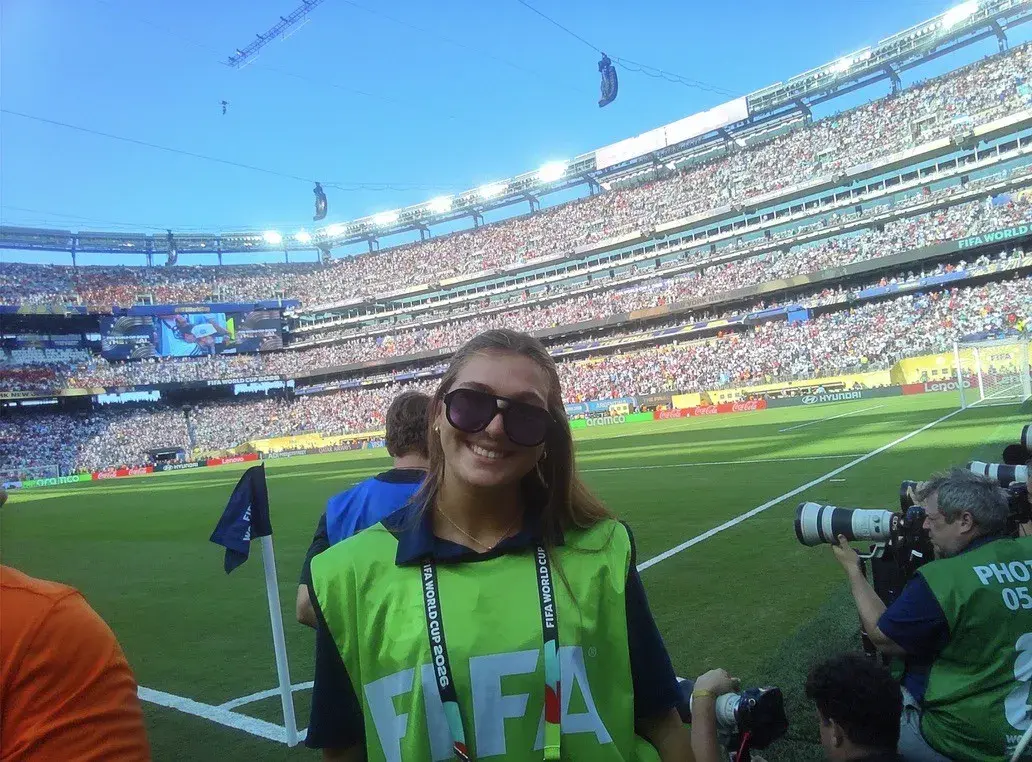
When the world's best players take the field, billions of dollars in talent depend on the safety of the surface beneath their feet. Long before kickoff, every blade of grass, painted line, and performance metric had to meet FIFA's precise standards. Brooke Rienecker helped make that possible.
Landing that responsibility didn't happen overnight. Months before the tournament arrived in her home state of New Jersey, the Flagler senior, then a junior, set out to break into the sports industry. She spent nearly seven months applying for internships across the country, submitting more than 60 applications before finally earning a field operations internship with MetLife Stadium, temporarily renamed New York New Jersey Stadium for the FIFA World Cup. During the hiring process, she learned more than 600 applicants had competed for the position.
"I was proud of myself that even though I didn't have that intense background and experience that maybe the other candidates did, I still was able to land that internship," Rienecker said.
As a business administration major with a minor in data science and a midfielder on the Flagler women's soccer team, Rienecker thought she understood the game. She quickly realized she had only seen one side of it.
From the day the natural grass pitch was installed in May until the World Cup Final, she worked alongside MetLife Stadium's in-house grounds crew, FIFA staff, and Penn State doctoral student in plant science Ava Veith to prepare one of the most scrutinized playing surfaces in the world.
Every morning began with collecting data on moisture levels, traction, ball roll, field firmness, and shock absorption before the results were transformed into heat maps that guided the day's maintenance.
"I don't even think people know that testing even goes on to begin with," Rienecker said. "They just think it's a field, but it's got to meet all these criteria that FIFA has created."
The internship also revealed an unexpected connection to her Flagler education. While she anticipated using lessons from her business courses, Rienecker found herself relying just as heavily on her data science minor to collect, organize, and interpret the information that shaped decisions on the pitch.
"I wasn't expecting that (data science minor) to tie in, but it did perfectly," she said.
No two days looked the same. Beyond collecting data, she helped measure mowing patterns, paint field markings, organize uniforms for the nearly 30-member pitch crew, and repair divots during halftime so the surface remained consistent throughout each match.
"It's a weird thing to explain, but it's arguably one of the most important roles that you could have within the World Cup," Rienecker said. "Because if the pitch wasn't playable, everyone would be commenting about it."
The experience changed more than how she viewed the game. It also changed how she viewed leadership.
Throughout the tournament, Rienecker watched experienced professionals manage one of the world's largest sporting events, often thinking back to Dr. Charles White's management course at Flagler. One lesson, in particular, stayed with her. As the tournament concluded, her supervisor handwrote personal notes to every member of the pitch crew and assembled gifts thanking them for their contributions.
"I was like, 'Wow, that's a really smart way to thank your connections and keep growing in the industry,'" Rienecker said.
Those relationships became one of the internship's greatest takeaways. Arriving home in New Jersey without knowing many people in the industry, she left with mentors and professional connections across FIFA, stadium operations, and sports management.
The summer also reshaped her career aspirations. Before arriving at MetLife Stadium, Rienecker had never considered a future in turf management. What she initially thought was simply "working with grass" became an introduction to an industry built on science, technology, event management, and collaboration. She now plans to continue exploring opportunities in both sports management and turf management while pursuing graduate school after earning her Flagler degree.
Months after helping test, maintain, and prepare the pitch, Rienecker found herself adding one final touch. She helped paint elements on the very field where the FIFA World Cup Final would be played.
"I got to paint the center circle," she said. "Then I got to do the spot in the center circle and the corner flag part. Obviously, my main job wasn't to paint, but I got to be involved and be a part of it, which was so cool."
Days later, she watched some of the world's greatest players compete on that same field, just 20 minutes from the home where she grew up.
"It was the coolest experience of my life," Rienecker said. "I'm a college soccer player coming back to my home state for the summer. The World Cup Final is being played 20 minutes from my childhood home, and I'm getting to work on the field, seeing my idols that I've grown up watching play. It was a complete full-circle moment.”