

The following recap, written by professor and faculty advisor for the trip Dr. Sandra Davis, highlights the group’s experiences and adventures across Croatia throughout mid-May.
Days One & Two
Our Croatian journey began with a two-day stay in Zagreb, the country’s vibrant capital where centuries of history blend effortlessly with modern European energy.
Surrounded by parks, mountains, and lakes, Zagreb feels both cosmopolitan and deeply rooted in tradition. Walking through the cobbled streets of Upper Town, we explored a city where ancient churches stand beside Art Nouveau architecture and modern skyscrapers.
Highlights included Ban Jelačić Square, the Cathedral of the Assumption of the Virgin Mary, Dolac Market, St. Mark’s Church, and the famous Green Horseshoe, each offering a glimpse into Croatia’s rich cultural identity and Central European heritage.
Day Three
The following day took us beyond the city to Kezele Farm, a family-owned countryside estate near Zagreb that offered an authentic look at Croatian rural life.
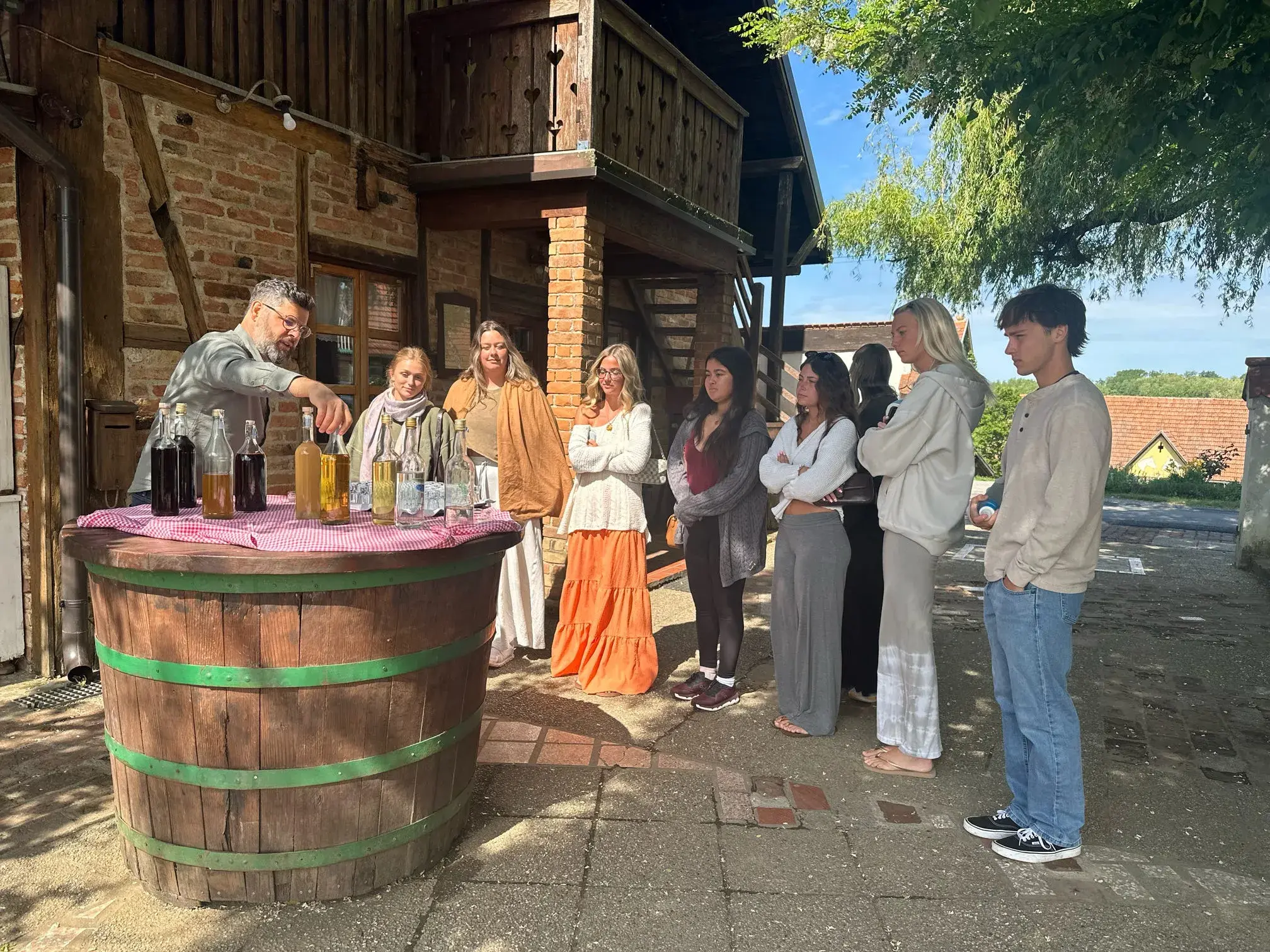
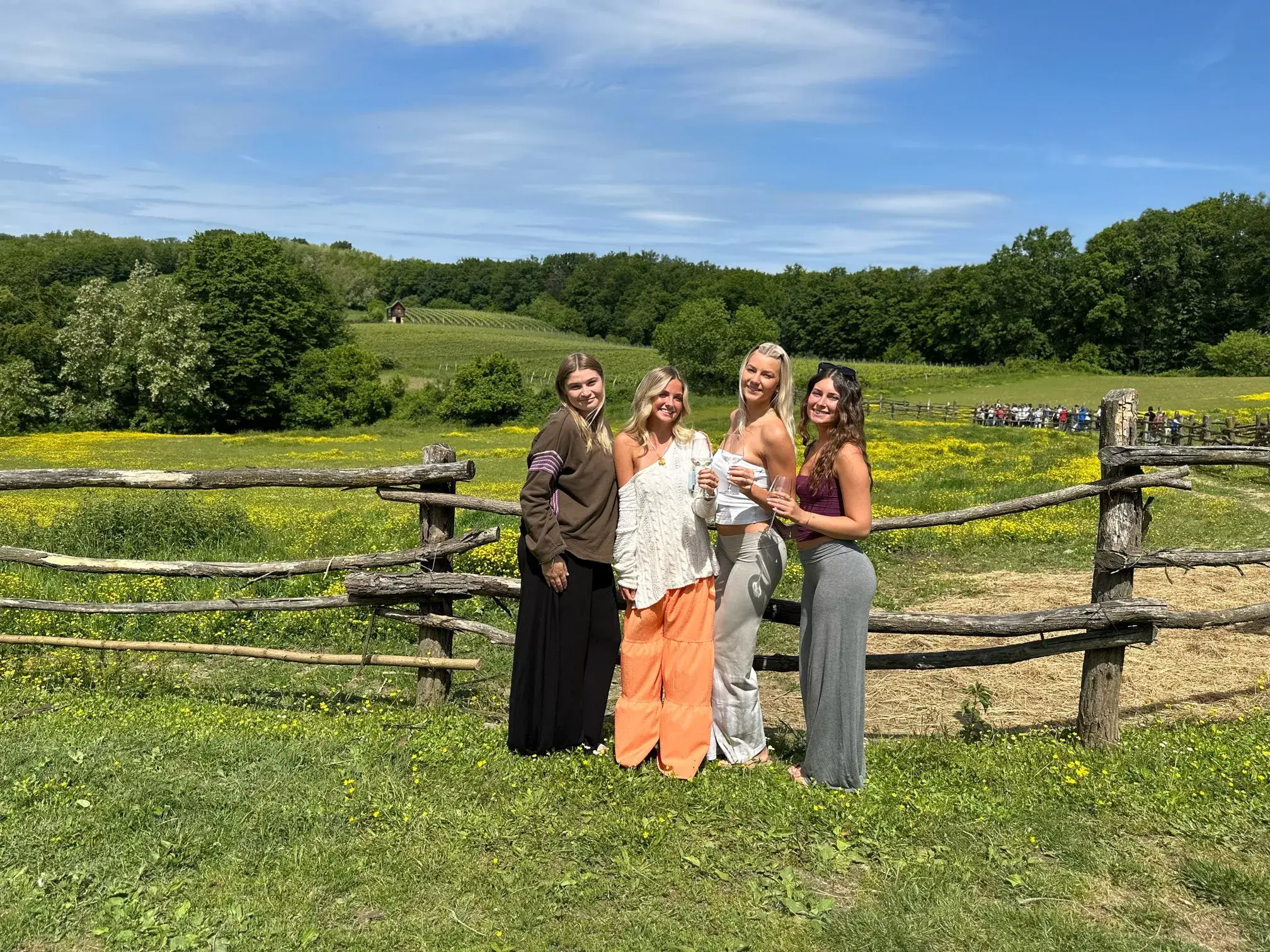
Surrounded by vineyards, historic wooden homes, and scenic walking paths, the farm welcomed us with homemade cuisine, local wines, and warm hospitality. Our farm-to-table lunch featured traditional kotlovina, homemade sausage, baked beans, potatoes, fresh bread, apple strudel, and regional flavors that reflected Croatia’s agricultural traditions and deep connection to the land.
Day Four
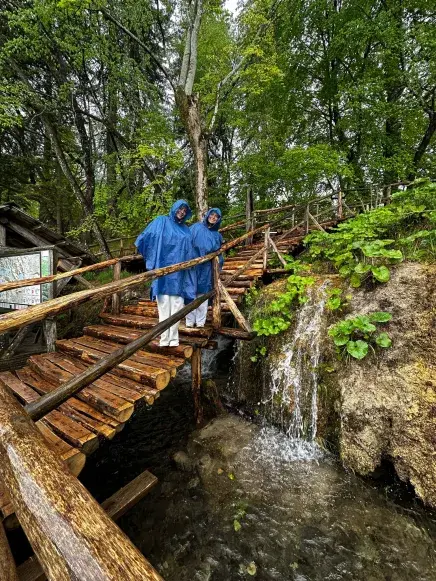
On May 15, we traveled south toward Split with a stop at Plitvice Lakes National Park, one of Croatia’s most breathtaking natural treasures and a UNESCO World Heritage Site. Sixteen emerald lakes connected by cascading waterfalls stretched across the mountainous landscape. Wooden footbridges carried us over crystal clear water while boat rides and panoramic trails revealed why Plitvice is considered one of Europe’s most beautiful national parks.
Days Five & Six
Arriving in Split introduced us to the heart of the Dalmatian Coast, where turquoise Adriatic waters meet dramatic mountain backdrops and Roman history lives within the modern city. At the center stands Diocletian’s Palace, built more than 1,700 years ago as a retirement residence for the Roman emperor Diocletian. Today the palace forms the living core of Split, filled with cafés, shops, hidden courtyards, and winding stone alleyways.
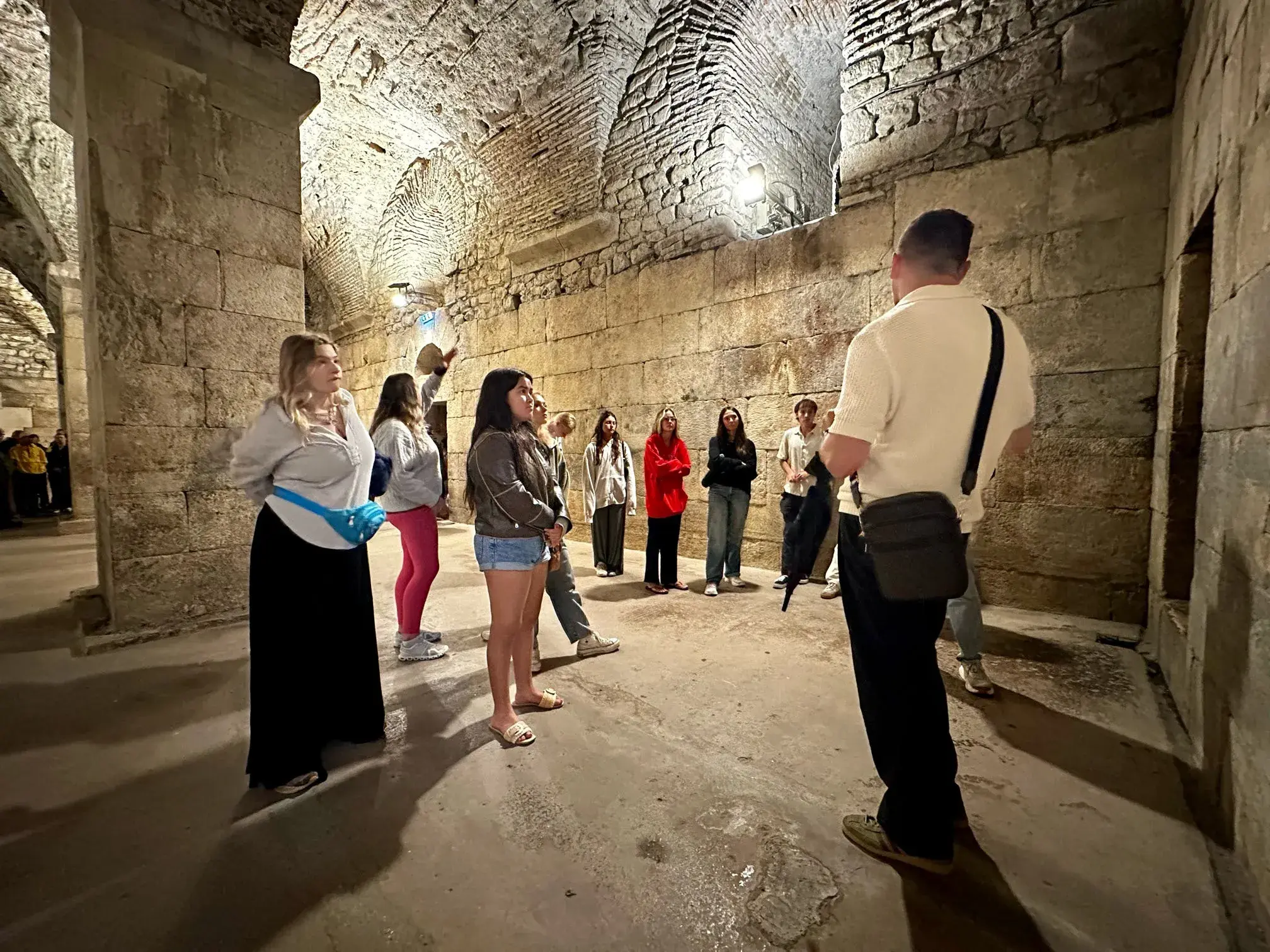
Our guided walking tour of Split revealed seventeen centuries of architectural layers woven together into one city. Ancient Roman walls stand beside medieval buildings and modern apartments, telling the story of continuous transformation across generations. We visited the Cathedral of St. Domnius, originally built as Diocletian’s mausoleum, where Roman and medieval architecture combine beneath its towering bell tower and intricately detailed interior.
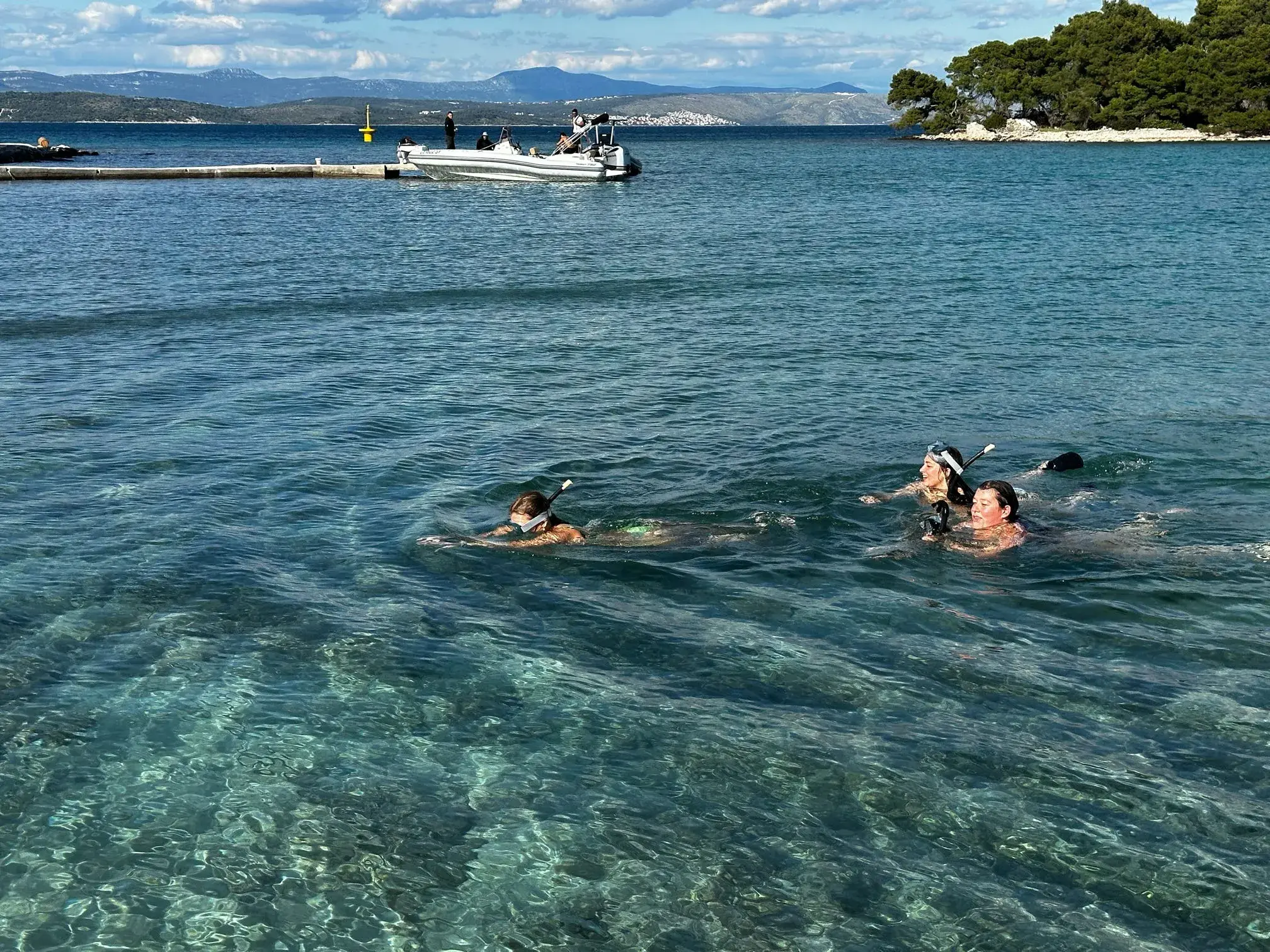
One of the most memorable days of the journey came during our Adriatic boat excursion departing from Split. Music played as we sped across turquoise waters toward the UNESCO listed town of Trogir, the Blue Lagoon, and the peaceful harbor village of Stomorska on Šolta Island.
Trogir felt frozen in time with its medieval streets, Venetian architecture, and Adriatic charm. Kamerlengo Fortress still overlooks the harbor as it has since the 15th century, while the Cathedral of St. Lawrence rises above the town with centuries of Romanesque and Gothic history carved into its walls.
From there, we continued to the Blue Lagoon, where crystal clear water and endless shades of blue created the perfect setting for snorkeling and sightseeing along the Adriatic coast. Our final stop in Stomorska on Šolta Island offered a slower pace, charming waterfront views, and a glimpse into traditional island life.
The academic portion of our journey deepened our understanding of Croatia’s tourism and cultural identity. In Split, we met with Josipa Dronjić from the Tourism Board of Split-Dalmatia County to discuss tourism development, heritage storytelling, and the integration of culture into regional identity. These conversations provided valuable insight into how Croatia balances preservation with modern tourism growth.
Later that evening, we boarded a five-and-a-half-hour ferry ride from Split to Dubrovnik. As the Adriatic stretched endlessly around us, the captain invited students onto the bridge for great conversations and panoramic views across the sea, turning the journey itself into part of the adventure.
Day Seven
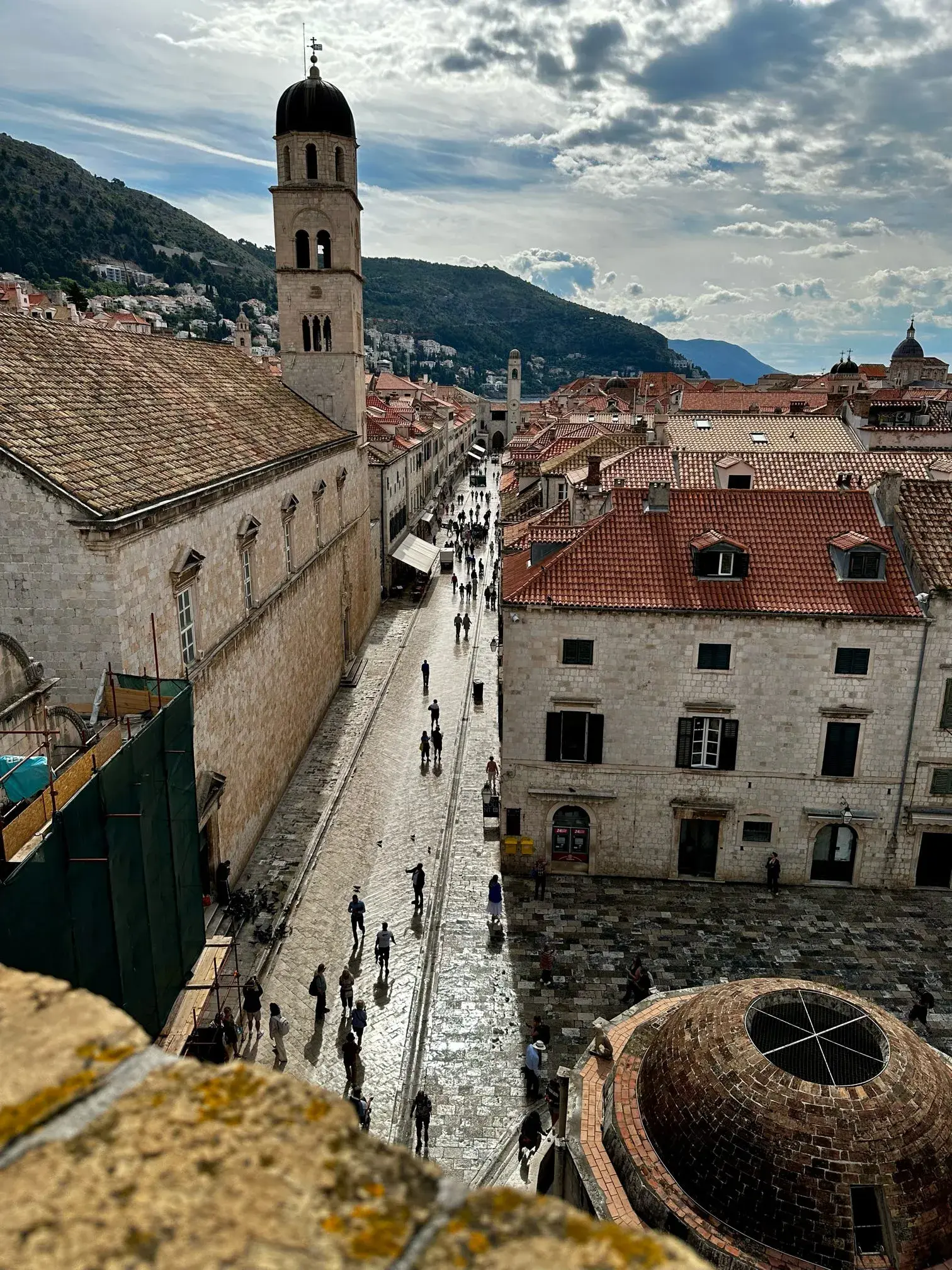
Arriving in Dubrovnik felt like stepping into another century. Rising above the Adriatic with limestone streets, red rooftops, and ancient stone walls, the city remains one of Croatia’s most iconic destinations. Often called the “Pearl of the Adriatic,” Dubrovnik carries centuries of maritime history, resilience, and beauty within its fortified walls. Despite significant damage during the breakup of Yugoslavia in the 1990s, the city rebuilt itself and remains a UNESCO World Heritage Site celebrated around the world.
Days Eight & Nine
Our guided tour of Dubrovnik’s Old Town and Mount Srđ revealed why the city captivates visitors so deeply. Walking the famous city walls meant climbing more than a thousand stone steps while overlooking the Adriatic from every angle. Originally built and strengthened between the 12th and 17th centuries to protect the Republic of Ragusa from invasions by land and sea, the walls now offer some of the most unforgettable views in Europe.
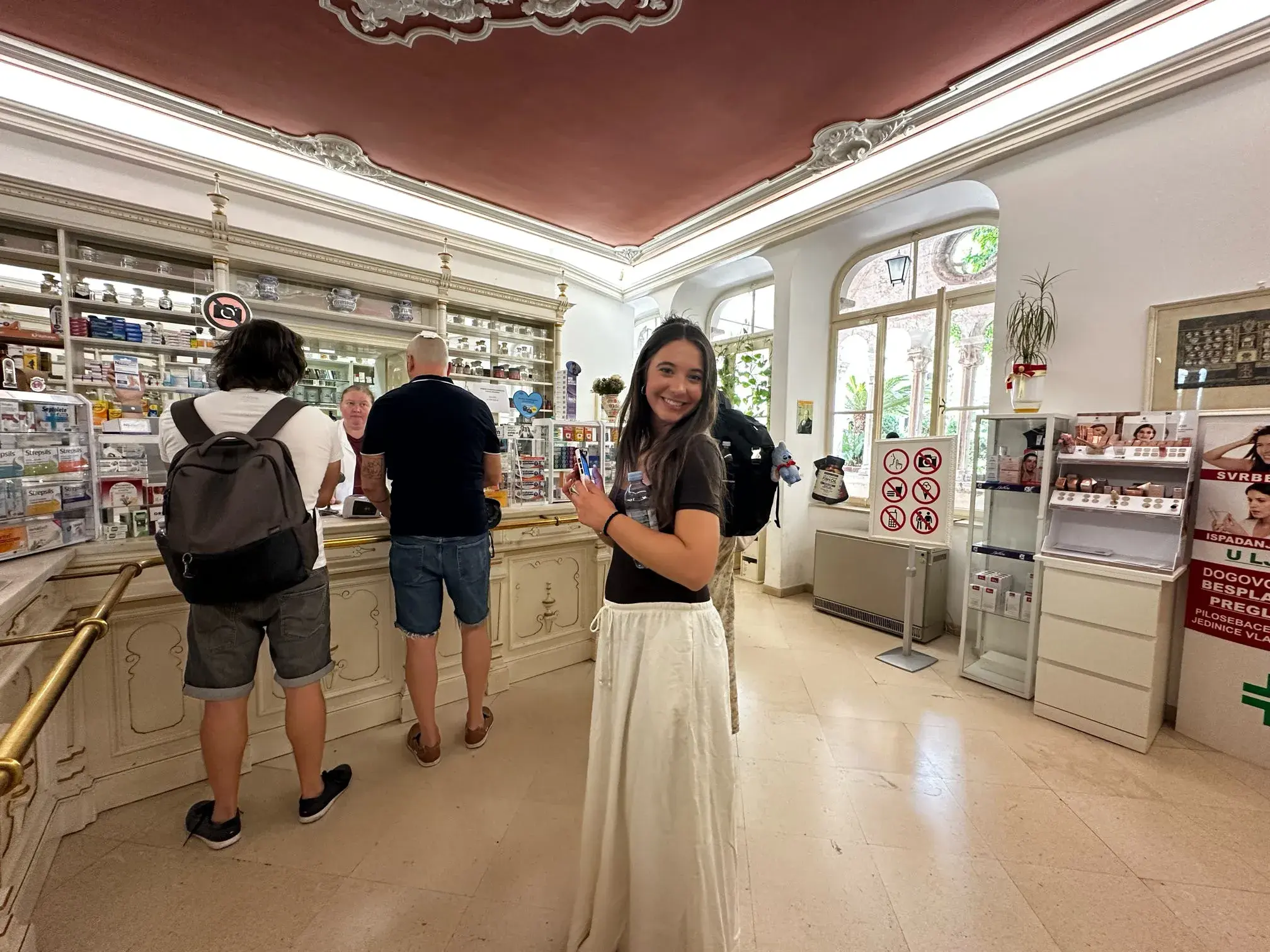
At the Franciscan Monastery, we visited one of the oldest continuously operating pharmacies in Europe, founded in 1317. For centuries, monks prepared herbal medicines and remedies for travelers entering the city through Dubrovnik’s gates. Nearby, a hidden dungeon and fortres chambers revealed a darker side of the city’s history, reminding us that behind Dubrovnik’s beauty lies centuries of defense, survival, and endurance.
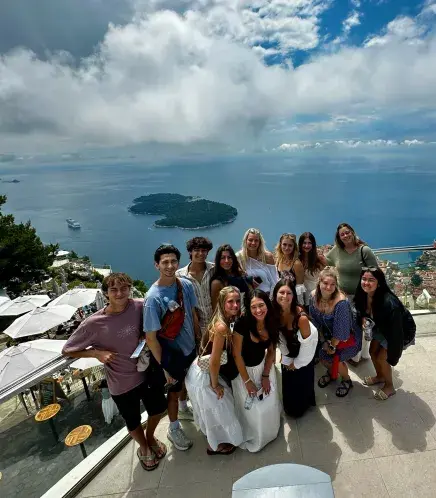
A highlight of the day was lunch at Restaurant Panorama atop Mount Srđ, reached by Dubrovnik’s cable car. Overlooking the Old Town and the Adriatic Sea, the panoramic views offered a breathtaking perspective of the city’s stone walls and coastline below.
The following day’s academic engagement with Marin Kaporelo focused on Croatia’s cultural model, revitalization efforts, and summer festivals, further connecting our experiences to the country’s evolving identity and preservation of heritage.
Our final free day in Dubrovnik allowed time to fully absorb the atmosphere of the city. Whether wandering through hidden alleyways, relaxing beside the crystal clear Adriatic, or revisiting the city walls, Dubrovnik continued to reveal layers of beauty and history around every corner. From ancient monasteries and marble streets to beachside dinners overlooking the sea, the city balanced grandeur with warmth and hospitality.
Final day & Farewell
As the journey came to an end with a farewell dinner along the coast, Croatia left us with more than photographs and memories. It offered an experience where history, culture, resilience, natural beauty, and human connection all came together across one unforgettable week.
What made this experience truly special, however, was the group that shared it together. From the very beginning, there was something uniquely positive about this group of students, and over the course of our time in Croatia, that became even more evident each day. Every student brought kindness, curiosity, flexibility, and enthusiasm to the experience, representing themselves, this program, and Flagler College exceptionally well throughout the journey.
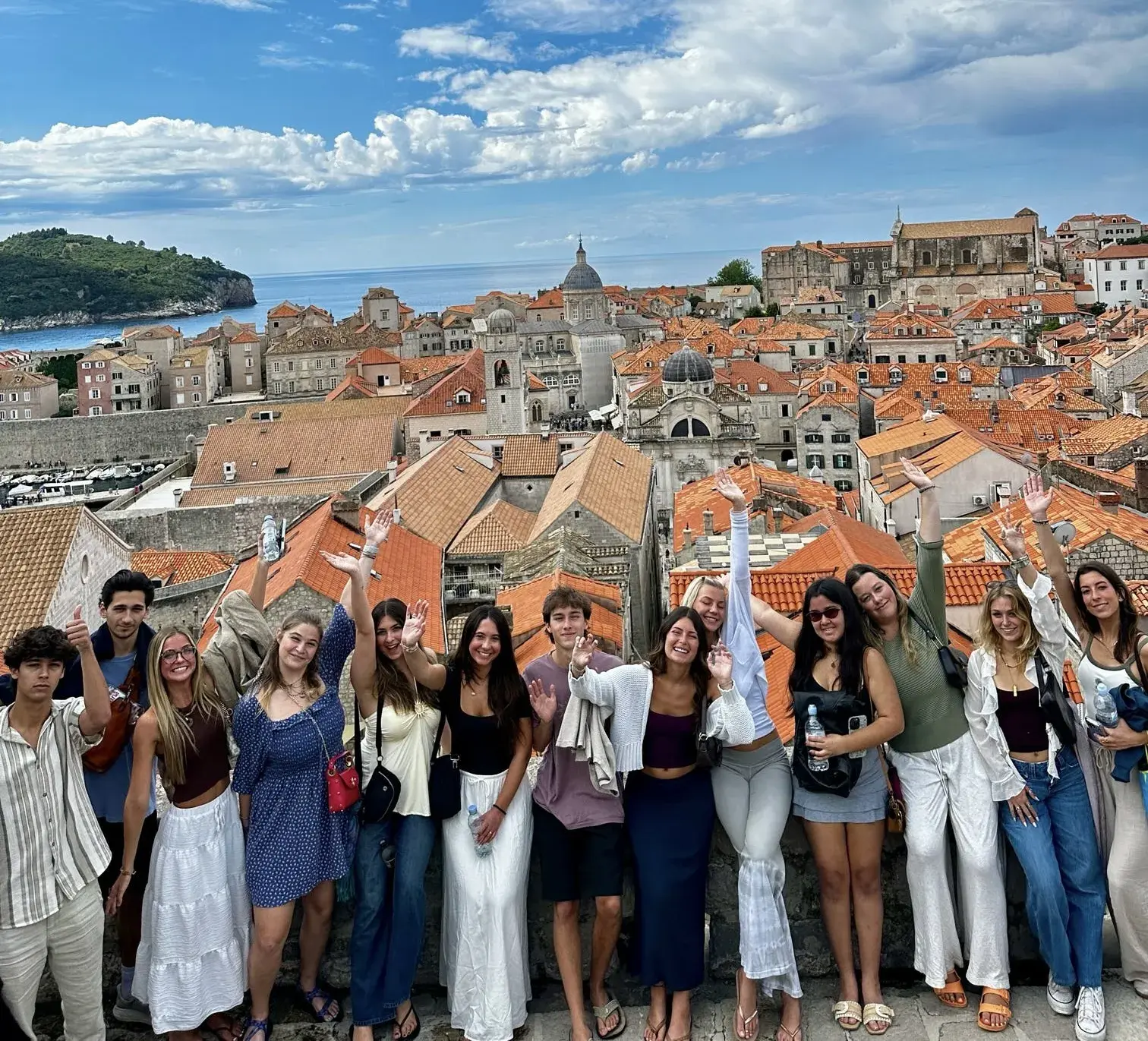
Traveling together across new cities, cultures, and experiences is not always effortless, yet this group approached every moment with openness, respect, adaptability, and genuine appreciation for one another and for the places we explored. Whether navigating ancient city streets, sharing meals along the Adriatic, learning from local experts, or simply enjoying quiet moments overlooking the sea, sharing journal entries, each student contributed something meaningful to the experience.
As we reflect on our time from Zagreb to Split to Dubrovnik, it is clear that the lasting impact of this journey extends far beyond the destinations themselves. The friendships formed, perspectives gained, and memories created together will remain long after the journey home. It was truly a privilege to experience Croatia alongside such an exceptional group of students.