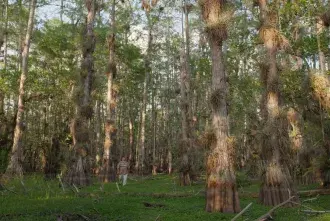

Led by Professor Barbara Blonder, more than 10 students have spent the past year using artificial intelligence and bioacoustic sensors to identify bat species across the 59-acre city-owned preserve.
While Fish Island is well known for its history and natural beauty, its bat population has remained largely undocumented. With support from the Flagler College Science Advisory Board, Blonder and her students are now filling that gap, utilizing technology that enables them to study wildlife without disturbing it.
AI and Acoustic Sensors: A Non-Invasive Approach
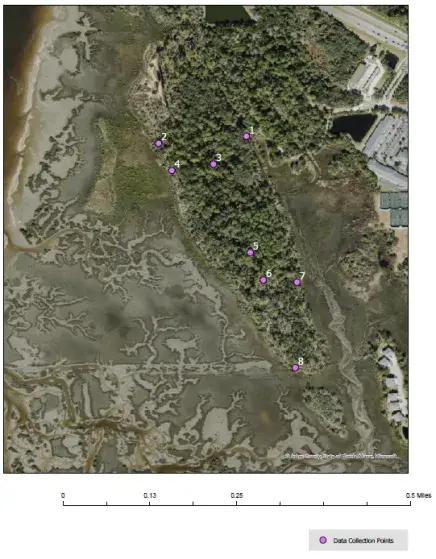
The team’s research began in fall 2024, when they deployed bioacoustic devices across Fish Island to capture ultrasonic calls, sounds far beyond the range of human hearing. These high-frequency recordings were then run through AI software that identifies bat species by their unique sound signatures.
“What’s so great about this is the way we were able to research the animals without harming them,” Blonder said. The approach eliminates the need for trapping or handling bats, ensuring the research does not disrupt their natural behaviors.
Students learned to analyze the data using specialized bioacoustic software, interpreting spectrograms to verify or refine the AI-generated identifications.
New Findings—and a First for Northeast Florida
Early results showed two dominant species on the island: the Mexican free-tailed bat and the evening bat. But after expanding their work in spring 2025, the team identified 12 different bat species on the preserve.
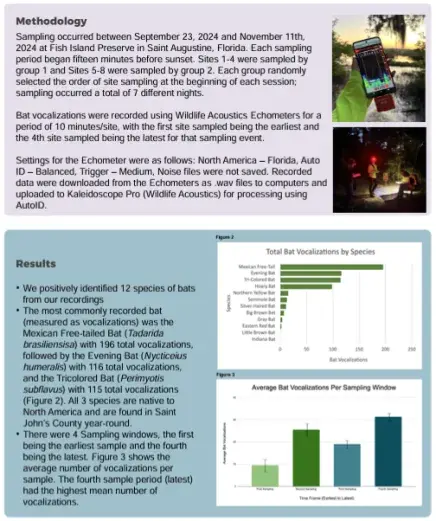
The research came with challenges, including interference from air conditioners and neighborhood noise. Student researcher David Stanley recalled learning to isolate the correct frequencies: “We could hear air-conditioning units and other noises that would interfere with the sounds,” he said. “We learned to extract only the data needed.”
Their findings represent a major step forward for local ecological knowledge. According to the team, this level of comprehensive bat biodiversity research had not previously been conducted in Northeast Florida.
Bringing Science Into the Community
The students presented their work at Flagler’s Science Capstone showcase in spring 2025 and at the GTM Research Reserve Conference. Their research poster is now on display at the GTM Research Reserve’s Education Center.
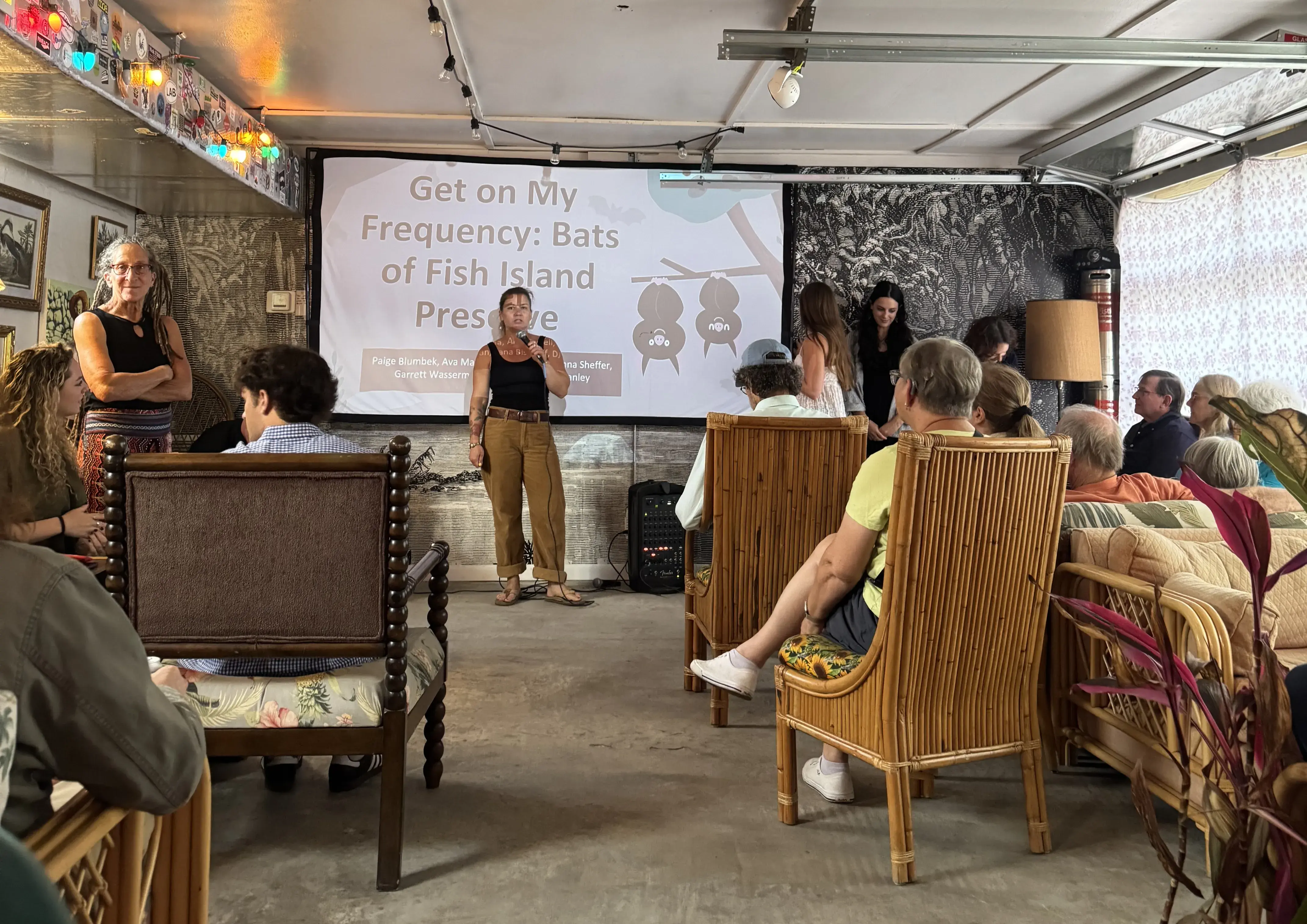
But one of the most meaningful moments came on Earth Day, when the team hosted a public presentation at Spinster Abbott’s, a local bodega and taproom. More than 50 community members packed into the venue, standing room only, to hear the students explain their findings.
Expanding Knowledge Beyond Florida
Blonder has also taken this technology abroad, using the acoustic sensors during a study-abroad trip to Bermuda in 2025. She hopes to compare bat populations there with those of the Azores in future research projects, creating an international learning opportunity for more Flagler students.
A Model of Undergraduate Research in Action
This project reflects Flagler College’s commitment to experiential learning and to serving the St. Augustine community through meaningful research. The involvement of the Science Advisory Board, which funded the equipment, demonstrates how partnerships strengthen the College’s Natural Sciences program and expand hands-on opportunities for students.
By blending ecological fieldwork, AI analysis, and public outreach, these students are helping protect local biodiversity while gaining skills that will shape their academic and professional futures.
And on Fish Island, thanks to their work, the nighttime soundscape is no longer a mystery—but a source of scientific discovery.