

The Financial Investment Club is building a space where students of any major and experience level can learn how markets work, explore investing strategies, and develop the confidence to make informed financial decisions long after graduation. Through beginner friendly discussions, mock trading competitions, guest speakers, and long-term plans for a student managed investment fund, the club aims to combine hands-on experience with community impact.
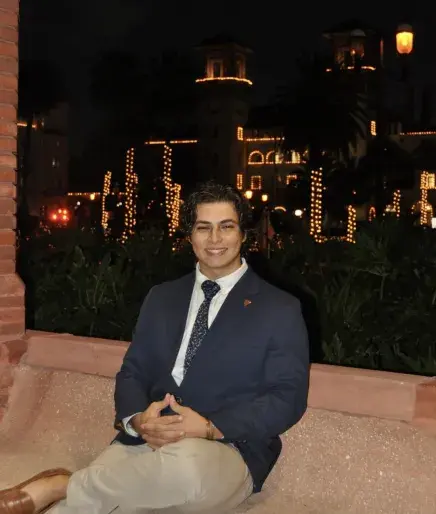
“We’re just a group of people who are going to meet you where you are, and we’re going to try and help you learn more,” said Rowen Rivera, a junior Accounting and Finance dual major with a minor in economics and president of the club. “Investing is a long game. I’m not expecting you to double your portfolio right away. No one is.”
Founded just one year ago, the Financial Investment Club is still in its early stages, but its ambitions for growth are clear. The mission is to provide students with an outlet to learn and teach others about investing, whether that means stocks, exchange traded funds, forex, bonds, mutual funds, hedge funds, commodities, or cryptocurrency. Meetings often center on understanding trading strategies, identifying stocks on the rise, analyzing different markets, and promoting financial literacy in an accessible way.
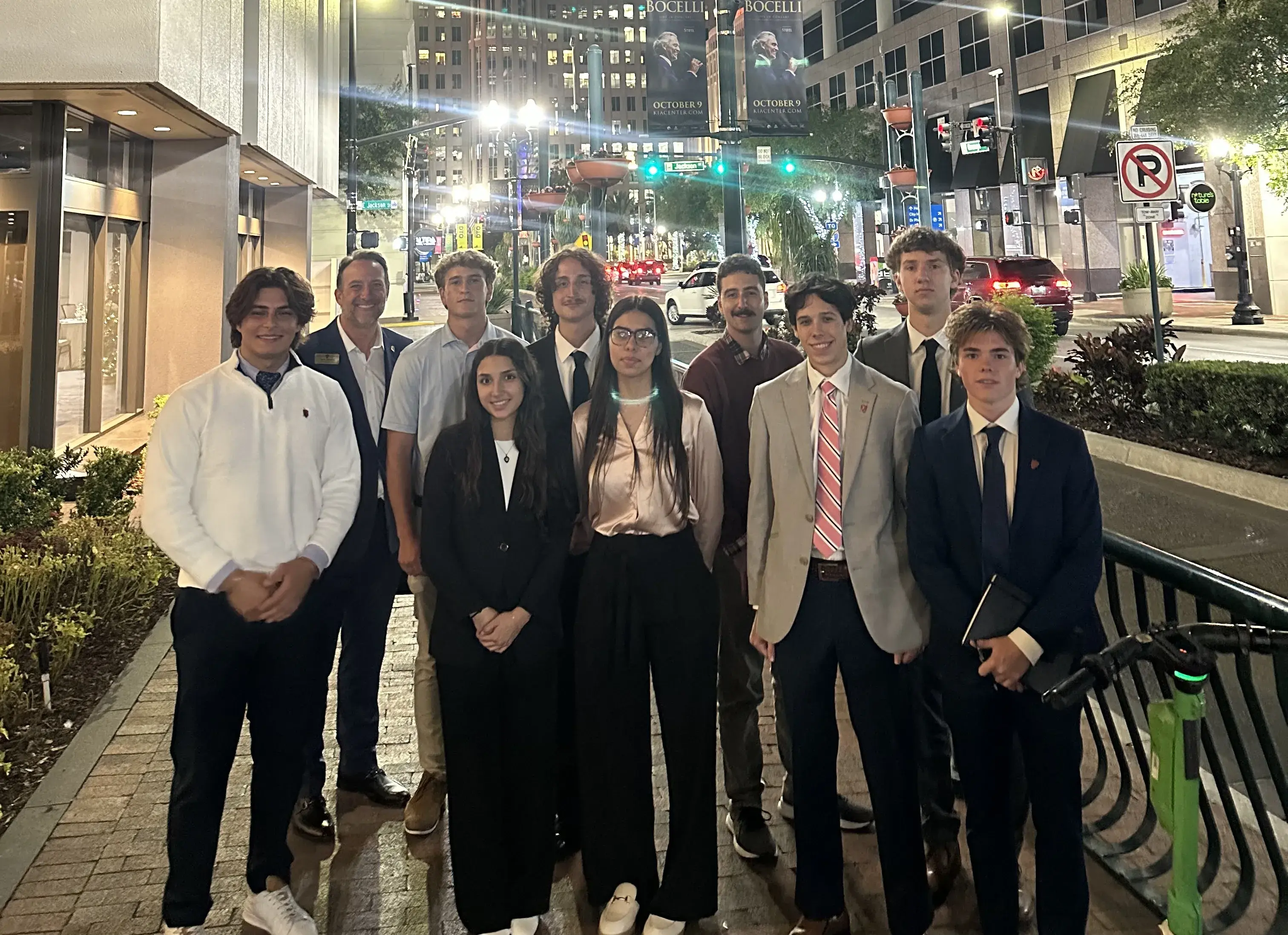
That growth received a boost last fall through a $5,000 gift from Keith and Shannan Jacoby, both members of the class of 1994, who met as students at Flagler College. Keith, founder and CEO of Clarity Wealth, and Shannan made the contribution in support of expanding hands-on financial learning opportunities for students. The funding supported trading software, general club operations, and a professional development trip to the Citrus Club in Orlando, where members visited the Roland George Investments Program to see firsthand how a student managed fund operates at an institutional level.
Membership in the club is designed to be collaborative and welcoming. On any given week, between 10 and 20 students attend meetings, with 50 to 70 students currently on the club’s email list. Discussions are intentionally open-ended, allowing students to share personal investing strategies, ask questions without hesitation, and learn from one another.
“It’s not about one particular ETF that I’m bullish on,” Rivera said. “It’s more about coming and learning. Let’s learn what an ETF is first. Let’s learn what the ratios on Yahoo Finance even mean. When you’re reading an article, how can you tie it back into those ratios to develop a coherent picture of what’s going on in the first place?”
For students hesitant to invest real money, the club offers simulator resources and structured mock experiences. This semester’s centerpiece is a stock tracking competition designed specifically for beginners.
Participants are allotted simulated funds and tasked with investing over a nine-week period in an effort to generate the highest return. The top three finishers will receive prizes of $400 for first place, $200 for second, and $100 for third.
“The whole point is, number one, to help people start to learn a little bit more about finance to where you can start reading financial advice articles and understand them,” Rivera said.
Beyond competitions, the club is building an internal investing infrastructure to mirror real-world financial management. Members are developing roles such as chief compliance officer and chief investment officer as they prepare to manage a mock portfolio collectively. While the funds are simulated, the experience is meant to be practical and transferable.
“As we build a better track record, people on the outside can look in and say, ‘Wow, these students are making solid returns. They’re doing things right," Rivera said.
The long-term goal is even more ambitious. The club hopes to establish a student managed investment fund supported by donor contributions. Under that model, members would manage real funds, with proceeds benefiting both the club and charitable organizations chosen by its members.
The gift received last fall marked an early step toward that vision by providing resources that strengthened the club’s operational foundation and expanded experiential learning opportunities.
“Our ultimate goal is to have donors give us funds that we can manage in real time,” Rivera said. “It also helps us because when you’re talking to an employer and you have actual real time experience, not just taking finance classes conceptually but applying those skills in the real world, that’s priceless.”
Networking remains a core component of the club’s value. Guest speakers visit periodically to share professional insights, employment opportunities, and personal finance advice. Rivera emphasized that these relationships could have a lasting impact.
“When you meet these speakers, you’re meeting potential employers,” he said. “Once they recognize you two, three, four times; they’re going to start getting your name out there. You cannot possibly foresee what sort of circumstances you can take advantage of just through putting yourself out there.”
The club also serves students outside traditional business disciplines. Rivera noted that financial literacy is a skill every graduate will need, regardless of major.
“We are all going to be independently financially responsible one day,” he said. “If you want to lay the foundations for a successful life, you need to be financially literate. You need to be making the correct financial decisions at an early point in your career.”
For Rivera, the club is also about the community. A transfer student from Long Island, New York, he attended Suffolk County Community College for two years before coming to Flagler. He joined the Financial Investment Club during its first semester and has been involved since the inaugural meeting. After the original president and vice president transferred, Rivera stepped into leadership.
“Building something here has made this experience at Flagler College amazing,” he said. “The opportunity to be a leader and to stick out, where in other situations you might just be engulfed in the crowd, has been such a blessing for me.”
He believes the club offers a space for like-minded students to connect in meaningful ways.
“When you come to the Financial Investment Club, you can meet people who want to be responsible,” Rivera said. “It’s all about who you surround yourself with. That’s cliché, but it’s true.”
“Do I think that next year at this time we’ll be managing millions of dollars? No,” Rivera said. “But I think every step along the way to achieving that goal is a beautiful experience to be a part of.”
For now, the focus remains on building interest, strengthening attendance, and encouraging students to take the first step.
“What do you have to lose?” Rivera said. “If you go to a meeting once per week for an hour, what do you really have to lose? You can only gain.”
As Business Week highlights academic exploration and professional growth, the Financial Investment Club is positioning itself as a launch point for students who want to better understand their financial futures and, ultimately, use that knowledge to make an impact beyond campus.