

About Zoe Kieffer
When Zoe Kieffer arrived at Flagler College, she knew she wanted to study the coast. By the time she graduated in December 2025 with a degree in Coastal Environmental Science and minors in Biology and Data Science, she had transformed that passion into a meaningful, hands-on research experience.
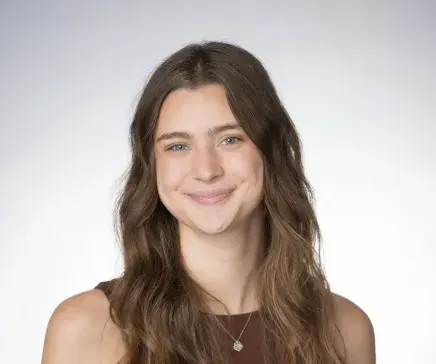
During her time at Flagler, Zoe contributed to biological surveys of local turtle populations, analyzed archaeological sediment samples, and conducted water quality assessments of regional waterways. Each project strengthened her fieldwork skills and deepened her understanding of the complex systems that shape Florida’s coastal environments.
Those experiences prepared her for a highly competitive National Science Foundation Research Experiences for Undergraduates (REU) program at Mote Marine Laboratory. The opportunity was a full-circle moment for Zoe, who had visited Mote with her grandparents during childhood trips to Florida.
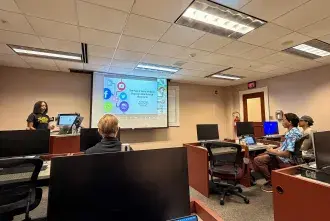
At Mote, she focused on coastal acidification, monitoring variable carbonate chemistry in Sarasota Bay. Her research not only expanded her scientific expertise but also led to an international opportunity: presenting her findings at the Ocean Sciences Meeting in Glasgow, Scotland, last month, one of the largest ocean science research conferences in the world. Zoe received funding from the Science Advisory Board Student Fund for Excellence, an Undergraduate Research Award, and Mote Marine Laboratory to attend the conference.
Below, Zoe shares more about her research journey in her own words.
My Research Experience for Undergraduates (REU) at Mote Marine Laboratory was one of the most challenging and rewarding experiences of my college career. Over ten weeks, I was fully immersed in marine research while also developing skills in science communication, professional relationship development, and problem-solving.
The most challenging and impactful part of the experience was the level of independence I was given. I was provided with an outline for my project and then trusted to develop experimental design and execute it. This was a significant shift from my research experiences at Flagler, where projects often followed more structured guidelines. While that independence came with moments of uncertainty and frustration over many trials and tribulations, it ultimately pushed me to grow more confident in my abilities as a researcher.
Throughout the summer, my mentors and fellow REU students played a major role in helping me navigate the challenges of the experience. Most of my cohorts had worked in larger labs and gone to larger institutions. At first, I felt out of place, but quickly learned we were all navigating the experience together. They reminded me that asking for help is an essential part of research and that stepping back to approach problems creatively often leads to better outcomes.
Before this summer, I never considered myself particularly creative. I saw myself as someone pursuing science, not art. The REU helped me realize that creativity is deeply embedded in scientific work, from designing experiments to interpreting unexpected results.
Conversations with my cohort also gave me a new perspective on my education at Flagler. I came to appreciate how unique my experiences have been because of the small size of the institution. Working closely with professors, engaging in smaller classes, and participating in a wide range of hands-on projects have shaped how I approach research and diversified my skills. Flagler’s proximity to coastal environments has been especially valuable, providing opportunities to directly interact with the systems we study.
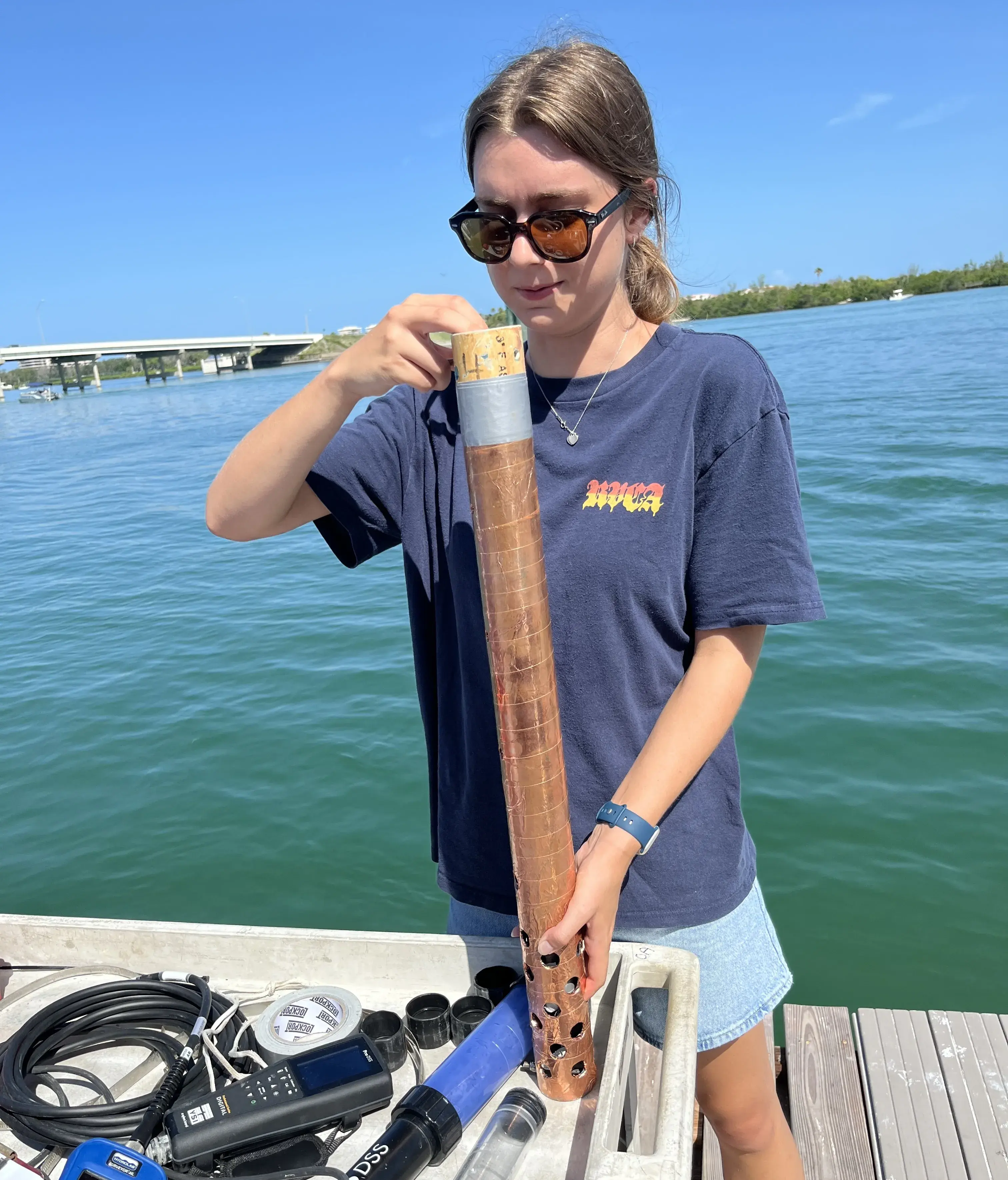
My research over the summer focused on understanding whether commonly available sensors could be used alongside existing monitoring efforts to better capture coastal acidification, a local expression of ocean acidification that can be highly variable because of freshwater and human inputs.
We deployed a sensor in an inlet for approximately a month, collecting high-frequency data while conducting targeted sampling that was later analyzed in the lab for sensor validation. This work is closely connected to the water quality monitoring efforts I have been involved in at Flagler while working under Dr. Matt Brown.
While the sensors alone were not as accurate as traditional, more reliable (and very expensive) methods, combining them with additional measurements provided a more complete understanding of coastal conditions. Unexpectedly, our results showed stronger day-night influences than the tidal signal we anticipated. Overall, the experience strengthened my appreciation for coastal research and reinforced the value of independence, collaboration, and adaptability.