

Dr. Carrie Grant is the chair of the Math Department at Flagler College. Despite her expertise in the mathematics field, her passion for sustainability, organic foods, and supporting local farmers has led to her creation of the Farm-To-Table local FlagSHIP (Flagler Sophomore High Impact Practice) course where students are given hands-on opportunities to learn from local farmers about our food systems.
Q&A with Dr. Carrie Grant
What is the framework of your Farm-to-Table FlagSHIP course?
Farm-to-Table is a nine-day local FlagSHIP. We spent the first day in the classroom doing some pre-work. We discuss regenerative farming, food scarcity, food deserts, and organic food. The other seven days are spent working in the field. My goal is to have students not learn through a textbook, but to learn hands-on. Most of these students have never dug in the dirt before, and this first-person experience helps them understand what truly goes into making the food that they eat. We visit a diverse number of places including composting sites, commercial farms, organic farms, cattle feed farms, aquaponic and hydroponic farms. Every night, the students’ assignment was to write a thank you note to whoever we worked with that day. Not only does this allow them to reflect on their day, but show gratitude. As much labor as we did at the farms, the students also shared many farm-to-table meals together at the places we visited.
In a world where farming is so commercialized, how do you approach the topic of organic sustainable and organic food with your students?
One of the farms that we visit is Ben Wells’ farm, which is the largest producer of Lays Potato Chips, and located only 20 minutes west of the College. They are a multigenerational farming family who has seen the industry change drastically. The bread-and-butter of their farm is the potatoes that they grow for Lays, but they have another section of the farm that is dedicated to organic produce. It’s interesting to hear Ben talk about how the non-invasive fertilizer is actually more efficient than the commercial fertilizer, and he has begun using it on the fields with his potatoes. He has a deep understanding of where farming started, where the practice became so commercialized, and where he wants to go with his farm. He’s not going to give up his Lays Potato Chips, but he is incorporating amazing, sustainable practices into his farm overall.
What drew you, as the chair of the Math Department, to lead a FlagSHIP on farming, food systems, and sustainability?
I always thought I had to do something with math, but I know that math is not the only passion in my life. One day I asked myself: what are the passions in my life beyond teaching mathematics? Fitness is super important to me, vegetarianism is very important to me, and ecotourism and sustainability is important to me. Every Saturday morning, I go to the farmers market and I buy my produce for the week. I actually came up with the idea for this FlagSHIP through the vendors I know at the farmers market. They made me want to expose students to something they might not otherwise experience. I know that I’m not the expert, but through this course, I can bring students to the experts.
Outside of your work as a professor, what practices do you personally live by when it comes to sustainability, wellness, and food?
I am a fitness instructor, and that’s very important to me. I work out every day of my life, or else no one in my life would like me. I also compost at my house and use it as fertilizer in my garden beds. I can’t say I’m 100% organic, but I lean towards it. I love shopping locally, and I go to the farmers market every Saturday. I’m also a vegetarian, and have been a vegetarian for over 30 years. I was around 13 when I decided I didn’t want to eat meat, just because I didn’t like meat. But the reason that I stuck with it was due to the environmental side of vegetarianism.
Food insecurity is an issue facing many people nationwide. Many people who live in impoverished areas only have access to over-processed food, which also creates a fresh-food disparity. How do you weave these social and health issues into your teaching in the FlagSHIP?
There are plenty of community gardens in our area, which not only provides free and fresh produce, but also builds a community, which I think is amazing. We also meet with Epicure, which is a non-profit in our area that takes food that would otherwise be thrown out and distributes it to people in St. Johns County that are experiencing food insecurity. This past year, I added a project on gleaning, which is another way that Epicure acquires their food. Gleaning is when people go into fields and pick produce that was not picked by the machinery. This past year, we went to the University of Florida Agricultural Center. When the students were doing the gleaning project, I saw them connect the most. Not only were they learning about the people who the food was going to, food deserts, and food insecurity, but they were also providing hands-on community service to help with those issues. That day, the students distributed somewhere between 3,000-4,000 potatoes, all of which were distributed to people by that afternoon. It made them realize “true, I might not be living in a $10 million mansion, but we are truly privileged compared to many people.”
How did you incorporate pillars of the FlagSHIP program like community-based partnerships and immersive learning into the course?
I did not want students to be in a classroom. Many FlagSHIPs involve traveling, and I didn’t want there to be a disjoint between those who travel and those who don’t. Just because a student can’t afford to go abroad doesn’t mean they should be stuck in a classroom, and the hands-on experience that students get through this FlagSHIP is just as transformative. Frogsong Organic is one of the places I take students during this FlagSHIP. The owners, John and Amy, sponsor people from Mexico to work for them and live on their farm. They serve lunch to their team once a week, eat with them, and get to know them, and we have always gone for these meals. John is fluent in Spanish, so the students can see the connections and community that they have built their workers. Another place we visit is the North Florida School for Students with Disabilities. They have a bee farm, aquaponic and hydroponic farms called Berry Good Farms where the students are taught through these systems to have real-world, livable skills. It’s so interesting to see these students boss my students around because they are the experts, not us. My students let me know how moved they were by this experience and the one at Frogsong. It goes back to the pillars of FlagSHIP overall – they got to learn about a totally different community and culture, all while staying within an hour of the college.
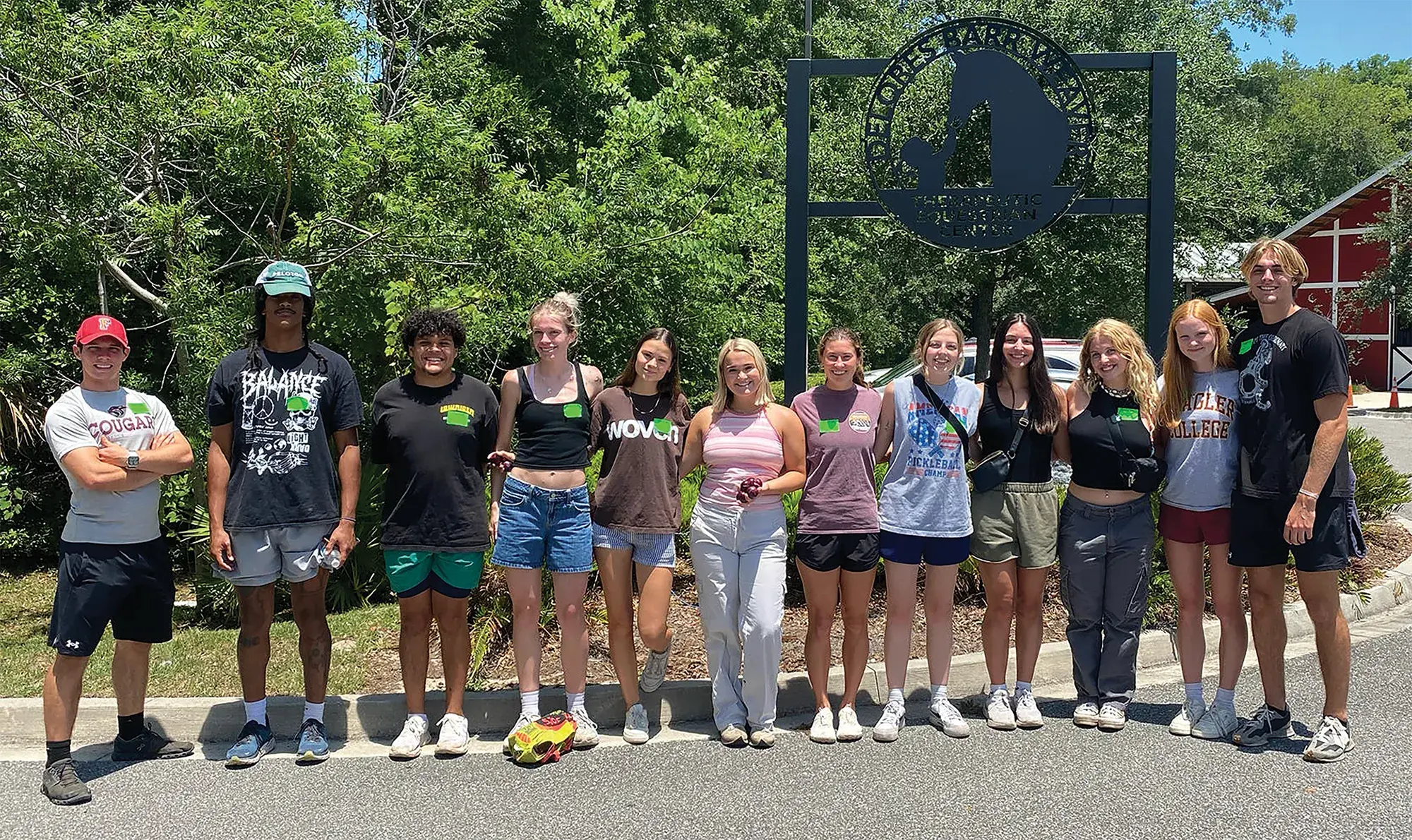
The Farm-to-Table FlagSHIP puts students in hands-on situations while they work on farms and see how food is grown. What do you hope students take away from that experience beyond the FlagSHIP?
I hope that students are more cautious of their food waste and understand that their food choices make a huge impact on the world. I also hope that they realize the issue of food scarcity. You and I can easily drive to a grocery store, but there are some people who can’t. I hope that they make an effort to purchase locally. If you’re buying potatoes from Idaho when we have huge potato farms 15 minutes away, that makes no sense. Then, you are also contributing to the emissions of the truck that brought those Idaho potatoes down to Florida. On top of all of that, I hope that they grow a stronger appreciation for the farmers. They are doing an amazing job, and often go forgotten. If there were no farmers, we would have no food. Since this FlagSHIP focuses on St. Johns County farmers, I have seen my students change through this course. Do you know how many of my former students I see at the farmers market now? I never even took them there! Since it’s focused on our local ecosystem, that makes action more attainable.