

Before she ever set foot in St. Augustine, she had already made one decision about her college experience: she would study abroad.
“I came into college knowing I wanted to study abroad at some point,” she said. “Having a global education program was a personal requirement of mine when searching for colleges to apply to.”
That desire was strengthened through her FlagSHIP experience. In January 2024, Kress traveled to Tanzania for two weeks with Dr. Jessica Howell and Adjunct Professor Lisa Fiala, focusing on learning about local nongovernmental organizations and nonprofits while engaging in cultural immersion.
“FlagSHIP was my first true international trip and was also another really transformative experience,” she said. “I came back and just felt like this was the first time my eyes were really opened to perspectives beyond anything I had known before. I then fully understood why people love traveling and experiencing different cultures.”
The experience sparked something lasting.
“It really sparked my love for travel and made me realize I was the kind of person who not only loved it but could endure the struggles that come with it,” she said.
Now a senior at Flagler College studying Coastal Environmental Science with minors in Biology and Sustainability, Kress has fulfilled that goal in a way that reshaped her academic path, her worldview, and her future.
Through Flagler College’s Global Education Program, she recently spent the Fall 2025 semester at Massey University, known in the Māori language as Te Kunenga ki Pūrehuroa, in Aotearoa New Zealand. What began as a personal priority became one of the most defining experiences of her college career.
From the beginning, she knew she did not want a study abroad experience that felt like an extended vacation. She wanted depth. She wanted immersion. She wanted to live somewhere long enough to fully understand it.
Studying abroad, she said, felt like “a once in a lifetime opportunity to live in a country for an extended period of time and really immerse myself in that country’s culture.”
It was also a challenge she intentionally chose.
“Not many people can say they went to live in a different country, not knowing a single person before going,” she said. “In that way, it aligned with my personal goal to continuously challenge myself and push my comfort zone.”
New Zealand stood out almost immediately. It was a place she had heard about for years, known for dramatic landscapes and outdoor adventure, but never imagined she would have the opportunity to call home. As she worked with Flagler’s Global Education office to explore options, Massey University offered the right academic fit while also promising something less tangible but equally important: immersion.
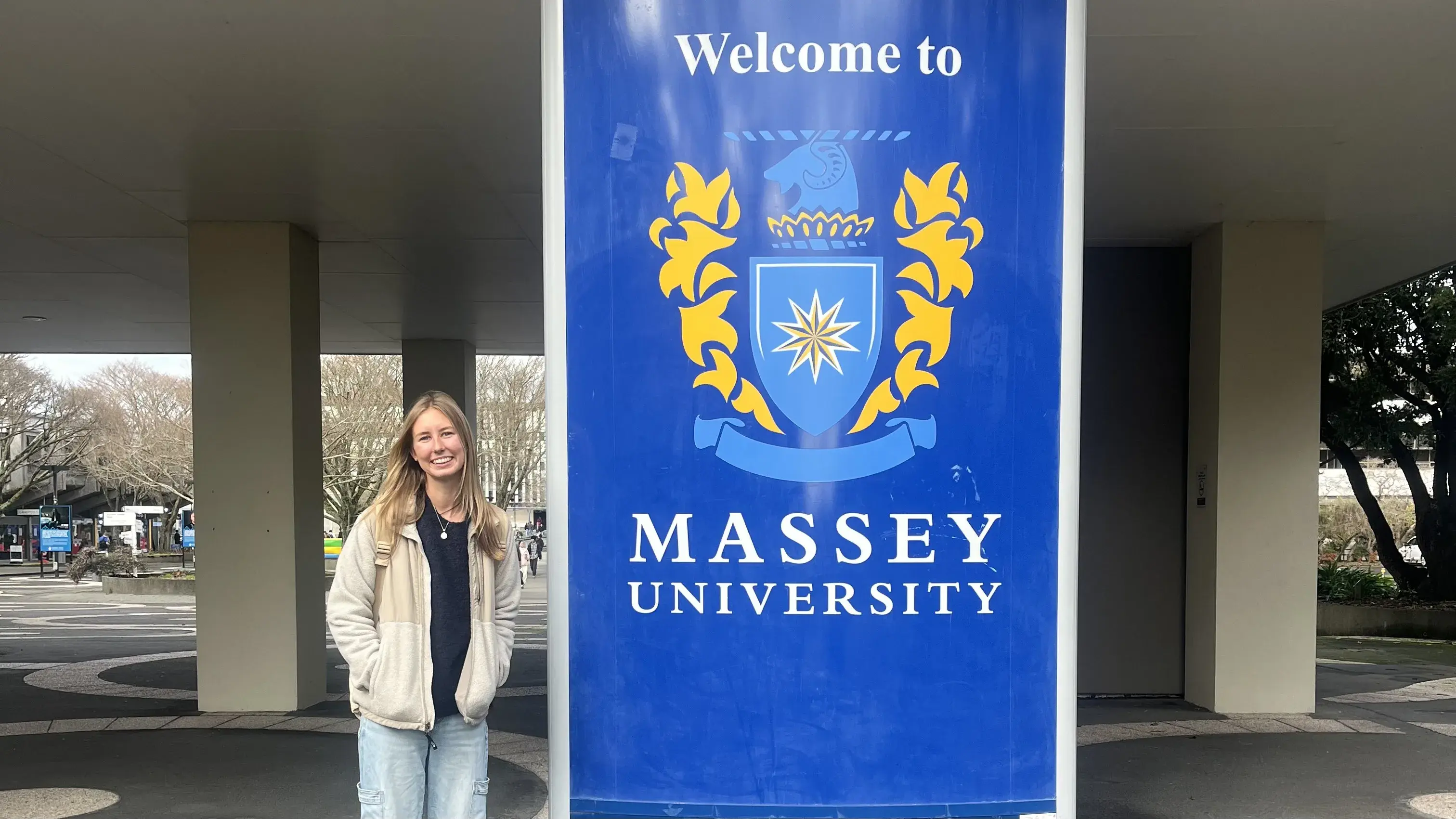
The chance to be the first Flagler student to attend that partner institution also added to the appeal.
“It felt exciting to travel to a place where people typically don’t study abroad, and go as the first Flagler student,” she said. “The aspect of the unknown made it even more adventurous and alluring.”
She arrived in New Zealand prepared to adapt. Living and studying abroad meant navigating a different academic structure, unfamiliar routines, and a new cultural context. She reminded herself that flexibility would be essential.
But once she settled into university life, she quickly realized she had underestimated just how impactful the semester would become.
“My expectations were blown out of the water,” she said. “I truly could not have asked for a better experience.”
The transition into life at Massey felt welcoming and supportive. Faculty and staff were eager to assist international students, helping her adjust to the academic system and feel at home in a new country.
“Their faculty and support teams were so kind, helpful, and excited to have us there and made all the international students feel so comfortable and welcomed,” she said.
Her semester, she explained, became far more than a collection of courses.
“My experience was so impactful as it encompassed so many things like education, science, indigenous culture, friendship, adventure, curiosity, and so much more.”
Academically, she enrolled in classes like Biodiversity of New Zealand, Geography of New Zealand, Bicultural Perspectives in Psychology, and Endangered Cultures. While the courses fulfilled requirements for her degree, they also expanded her understanding of environmental science on a global scale.
Studying in a bicultural country required her to engage deeply with Māori history and knowledge systems, and to examine how colonialism continues to shape environmental policy and social structures. In one discussion about conservation management, she explored how well-intentioned environmental protections can unintentionally harm Indigenous communities.
“It completely changed my approach and outlook on so many aspects of the world,” she said.
That shift, she added, reinforced something she now sees as essential to her field.
“In my field of environmental science, a global perspective, which is hard to achieve and maintain, is absolutely vital.”
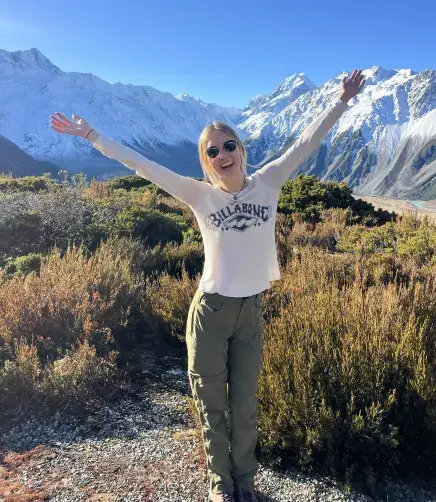
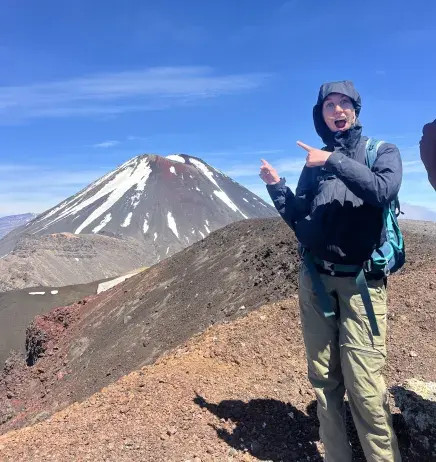
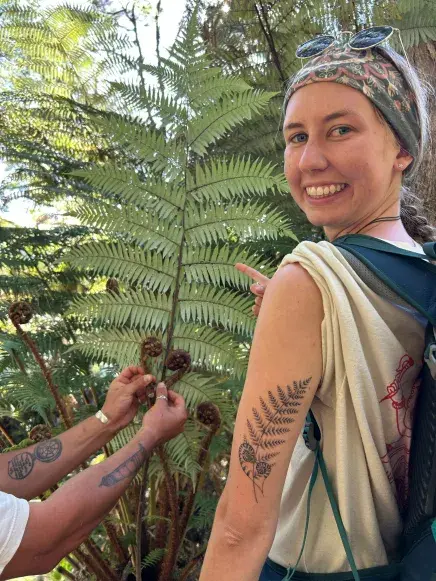
Outside the classroom, the country itself became part of her education. She encountered geothermal landscapes, black sand beaches, alpine environments, glaciers, and marine preserves unlike anything she had previously experienced. Seeing ecosystems she had only read about in textbooks strengthened both her academic understanding and her commitment to protecting natural spaces..
The semester gave her a clear competitive edge. Studying abroad in New Zealand provided insight into a different national approach to conservation and research, expanding her knowledge beyond Florida and the United States
“I can bring a fresh, synthesizing perspective to whichever organization or graduate school I work for or attend,” she said. The experience, she explained, demonstrates adaptability and a broader understanding of global systems, qualities that set her apart from other candidates.
The semester also expanded her sense of what is possible.
“This semester gave me the confidence that I could successfully travel and live abroad and also navigate a new academic setting,” she said. “It allowed me to realize that those opportunities could extend beyond Florida and even the U.S.”
She now plans to take a gap year before attending graduate school, potentially abroad.
“I am planning on taking a gap year before attending graduate school because this experience also continued to fuel my passion for travel,” she said.
Immersing herself in New Zealand cemented her love of experiencing new cultures and, as she described it, “walking in the shoes of someone who lives in a completely different place than me, even if it’s just for a moment.”
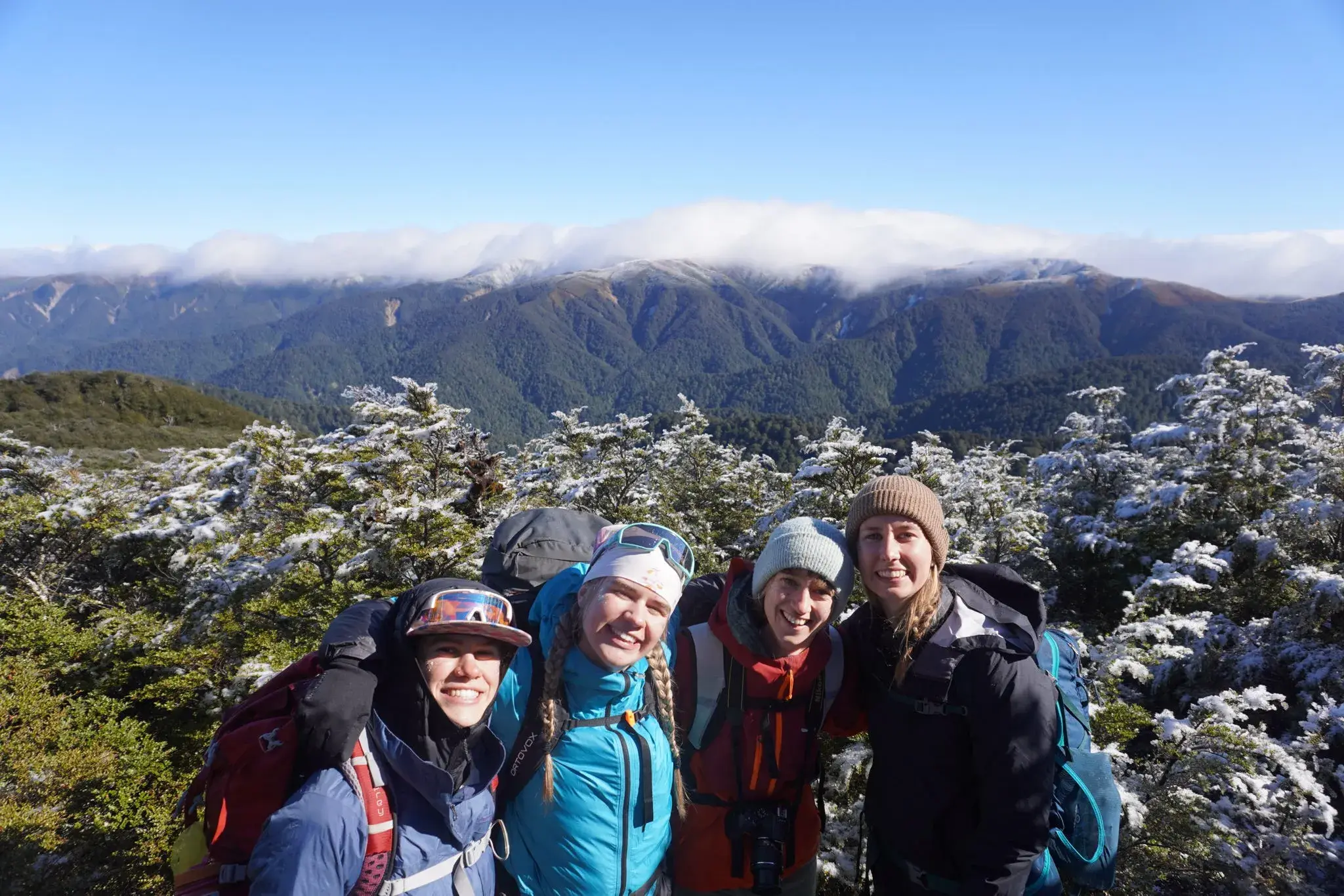
Some of her most transformative moments came after the academic term ended, when she and friends spent a month traveling the South Island in a van. The lifestyle was simple and, at times, physically demanding. Yet that simplicity became one of the most meaningful aspects of her time abroad.
“It felt like a very rare time in my life where I got to experience living in a very simple way,” she said.
There were other milestone experiences, including completing a five-day backpacking trip along the Abel Tasman coastline and hiking to Earnslaw Burn glacier. But it was often the quiet moments that left the deepest impression.
“What made it so meaningful were the small moments,” she said, recalling early mornings watching sunlight hit mountain peaks and evenings playing cards under expansive night skies. “It was so much time devoted to nature and friendship. It was a reminder of what I love and how valuable the simple things in life are.”
Looking back, she recognizes how rare that season was.
“I do not know if I will ever have the opportunity to live like that again in my life,” she said. “I feel so incredibly grateful for the experience.”
Her semester abroad also reshaped her worldview. Living alongside students from around the globe and engaging with local communities expanded her understanding of connection and belonging.
“You are reminded both how large and small this world is,” she said. “You are forced to think beyond yourself and your community.”
Looking back, she describes the return on investment as immeasurable.
“Travel is not reward for working, it is education for living,” she said, quoting the late Anthony Bourdain. “My semester allowed me to learn academically, personally, and culturally.”
For students considering whether studying abroad is worth it, her message is direct.
“Do it scared, do it alone, just do it,” she said. “It is daunting to leave everything behind and go try something entirely new, but that is what makes it such an amazing experience and truly transforms you.”